
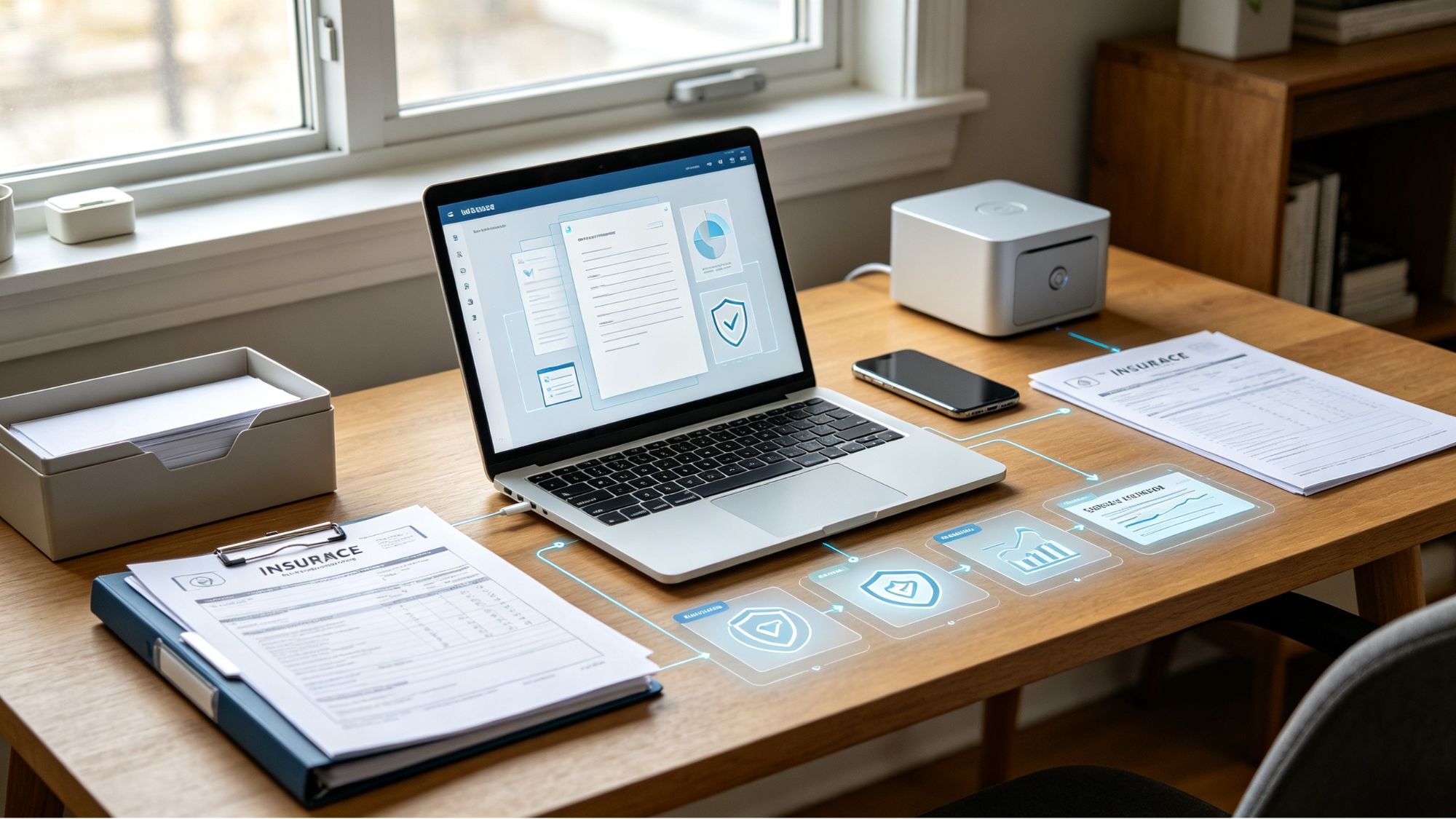
Insurance documents play an important role in protecting households and businesses, yet many policyholders only organize them when a claim occurs or when a renewal notice arrives. Policy declarations, endorsements, premium notices, and claim records are often scattered across email accounts, paper folders, and different digital storage locations.
When a property is damaged, a liability issue arises, or coverage details need to be verified, locating the correct documents quickly can become challenging. A structured digital insurance repository helps policyholders maintain a clear record of their coverage history, understand policy changes over time, and access important information when needed.
An insurance policy is not a single static document. Over its lifespan, coverage can change through renewals, endorsements, premium adjustments, and claim activity.
A basic policy package usually includes several different components:
Declarations Page: A summary showing coverage limits, deductibles, insured individuals, and policy periods.
Policy Contract: The detailed terms, exclusions, conditions, and definitions governing coverage.
Endorsements and Riders: Written modifications that add, remove, or adjust specific coverage provisions.
Claims Documentation: Records related to reported losses, inspections, repairs, settlements, and communications.
Keeping these documents together allows policyholders to understand which coverage terms applied at a specific point in time, especially when reviewing past claims or comparing renewal options.

An effective digital archive should organize documents according to insurance category and policy period rather than storing everything in one general folder.
A practical structure may include:
This section can contain:
Homeowners insurance policies
Renters insurance documents
Auto insurance declarations
Vehicle coverage endorsements
Property inventory records
Separate folders can be created for:
Health insurance plans
Dental and vision coverage
Life insurance policies
Disability insurance documents
Umbrella policies and excess liability coverage should be stored separately because they often provide additional protection beyond underlying policies.
Within each insurance category, create annual folders that separate different policy terms. For example:
Home_Insurance_2026
Auto_Insurance_2026
Life_Insurance_Permanent
This structure makes it easier to compare changes between policy years.
A well-organized folder system becomes much more effective when combined with consistent file names.
Instead of saving documents with generic names such as:
insurance.pdf
renewal_notice.pdf
use a naming format that provides immediate context:
YYYY-MM-DD_InsuranceCompany_PolicyType_DocumentType
For example:
2026-06-01_StateFarm_Homeowners_Declarations.pdf
This approach helps files automatically sort by date and allows users to locate specific records without opening multiple documents.
Important documents that benefit from standardized naming include:
Renewal notices
Premium payment confirmations
Policy declarations pages
Endorsements
Claim settlement documents
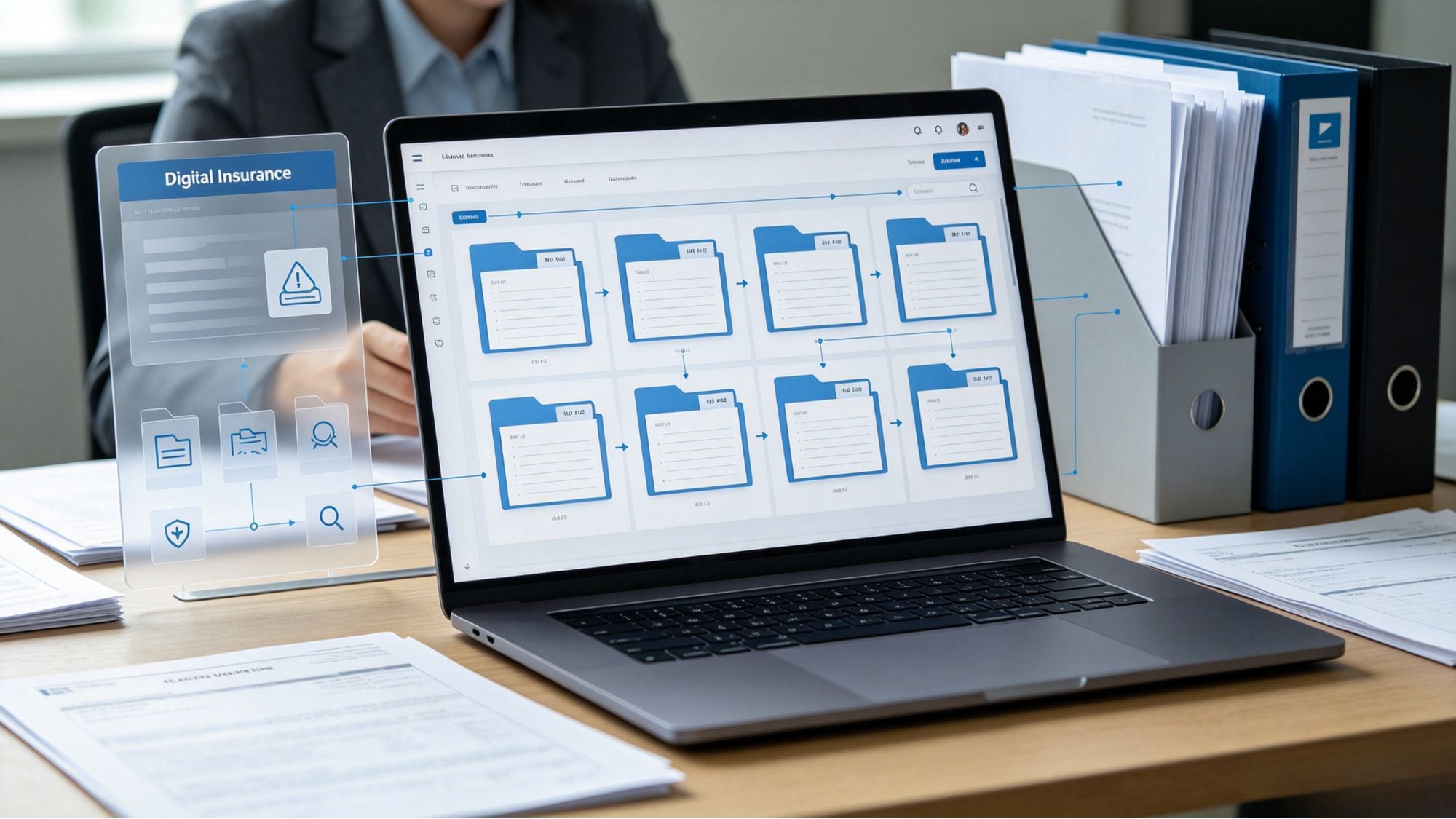
Insurance records should include more than active policies. Historical claims documentation can provide important context when reviewing coverage changes or responding to future questions.
Each claim should have its own folder containing:
Claim number and date of loss
Initial claim report
Photos or videos of damage
Repair estimates
Contractor invoices
Adjuster communications
Settlement documents
Payment records
For example, after a home water damage claim, storing inspection reports, repair invoices, and correspondence with the insurer creates a complete record of the event.
A well-maintained claims archive also makes it easier to review previous incidents when evaluating future coverage needs.

Insurance policies frequently change during their active period. A homeowner may add valuable property coverage, increase liability limits, or update insured information. These changes are typically documented through endorsements.
Because endorsements modify the original contract, they should be stored together with the related policy period rather than separately.
Renewal documents should also be preserved because they show changes in:
Premium amounts
Deductibles
Coverage limits
Policy conditions
Reviewing several years of renewal documents can help identify long-term trends and explain why insurance costs have changed.
Insurance documents often contain sensitive information, including addresses, policy numbers, and personal details. A reliable storage system should balance accessibility with security.
A common backup approach is the 3-2-1 method:
Maintain three copies of important files.
Store copies on two different types of storage media.
Keep at least one backup in a separate location.
For example, a policyholder may maintain:
An encrypted local storage copy
An external backup drive
A secure cloud backup
Regularly checking that backups can be opened ensures that documents remain available when needed.

Insurance information is especially valuable during unexpected events such as property damage, accidents, or natural disasters. Physical documents stored only at home may become inaccessible during an emergency.
A secure digital archive allows policyholders to quickly locate:
Insurance company contact information
Policy numbers
Coverage summaries
Claims instructions
Previous claim records
Keeping essential information available on a secure mobile device can make the initial claim reporting process more efficient.
A digital insurance repository provides a structured way to manage policies, endorsements, renewal records, and claims documentation. By organizing files by category, using consistent naming systems, preserving historical claim information, and maintaining secure backups, policyholders can improve their ability to review coverage details and respond efficiently when insurance information is required.
Insurance management is not only about purchasing coverage; maintaining accurate records throughout the policy lifecycle is an important part of responsible financial organization.