
An insurance policy looks simple from the outside. A policyholder pays a premium, and the insurer agrees to provide financial protection if a covered event occurs. Behind that agreement is a much more complicated calculation. Insurers have to estimate how often claims may happen, how expensive those claims could be, how long payments might continue, and how much financial capacity will be needed if actual experience turns out to be worse than expected.
That is where actuarial science comes in. Actuaries use probability, statistics, financial mathematics, historical experience, and economic assumptions to evaluate uncertainty. Mortality and morbidity models are particularly important in life, health, disability, and long-term care insurance, while frequency-severity analysis and catastrophe models play an important role in property and casualty coverage. These models do not predict exactly what will happen to a particular policyholder. Instead, they help insurers estimate patterns across groups of risks and use those estimates to inform pricing and financial planning.
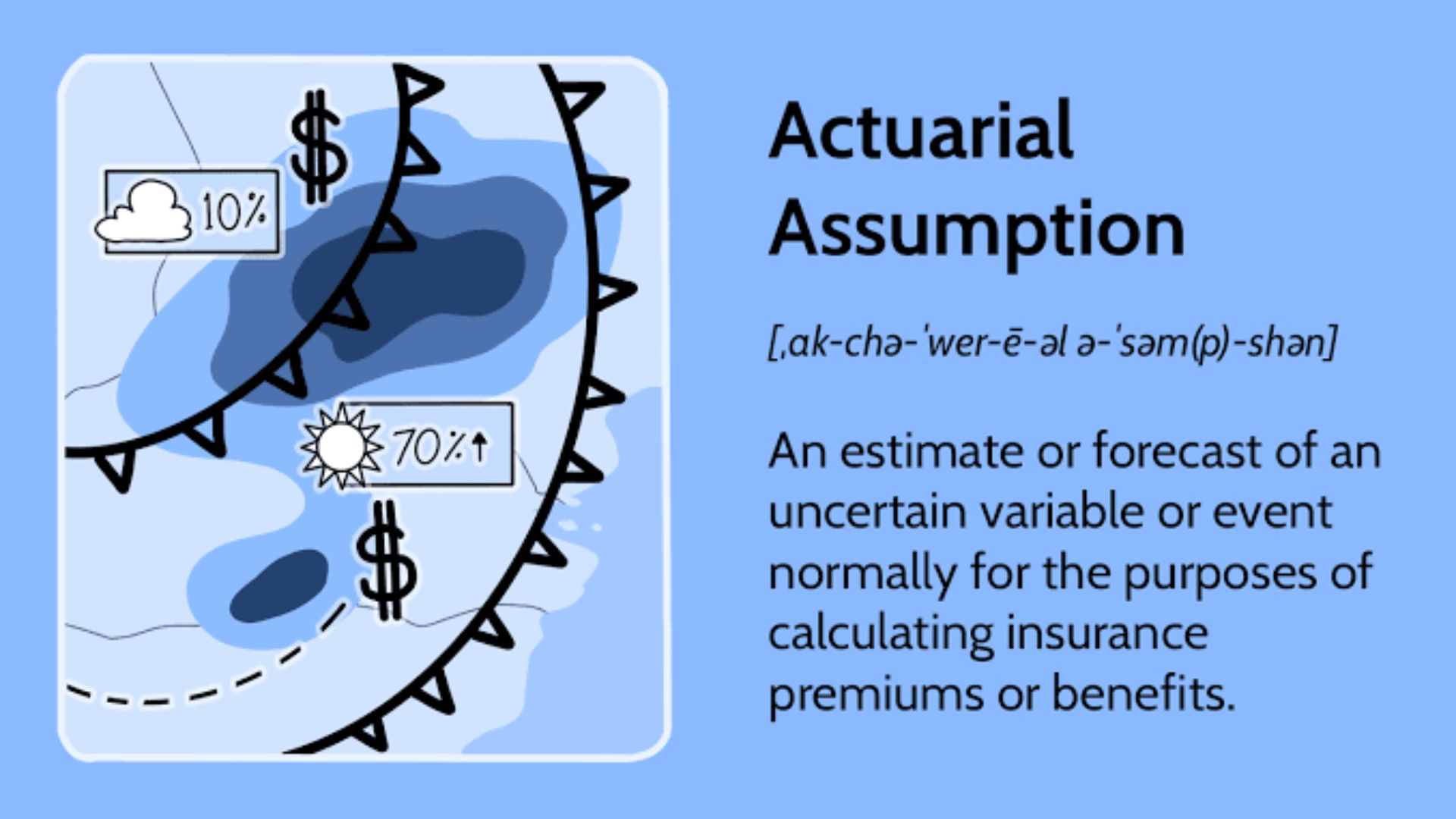
Insurance pricing begins with a basic problem: how do you put a financial value on an event that may or may not happen?
An actuary cannot know whether a particular driver will have an accident next year or whether a particular homeowner will file a storm claim. What can be estimated is the likelihood of those events across a sufficiently large group of comparable exposures. Probability distributions and statistical methods provide the framework for making those estimates.
Two concepts appear repeatedly in insurance analysis: frequency and severity. Frequency describes how often a loss occurs, while severity describes how much a loss costs when it happens. In a basic expected-loss framework, multiplying expected frequency by expected severity produces an estimate of average loss per exposure. That figure can serve as a starting point for estimating the expected cost of claims, although real-world pricing models can incorporate considerably more variables and more sophisticated statistical techniques.
Consider a simplified example. Suppose historical data indicate that about 2% of homes in a particular region experience a storm-related claim in an average year, and the average claim payment is $10,000. A basic calculation would produce an expected annual loss of $200 per home.
That $200 is not automatically the insurance premium. It represents an estimate of expected claims and leaves out expenses, reinsurance, taxes, capital requirements, uncertainty, and other elements of the insurance business. The distinction is important because insurers need to remain financially capable even when actual claims differ significantly from the average projected outcome.
For life insurance and annuity products, one of the fundamental actuarial tools is the mortality table, sometimes referred to as a life table. It organizes mortality experience by age and other relevant characteristics and provides estimates of the probability of death over specified periods.
Older mortality tables tended to present relatively straightforward age-based mortality rates. Modern actuarial analysis can be much more detailed. Depending on the application, models may account for changes in mortality experience over time, medical developments, lifestyle patterns, and differences among population groups.
The direction of longevity trends matters because life insurance and annuity products can be exposed to mortality in very different ways. Consider a term life insurance policy issued to a 40-year-old. The insurer needs to estimate the probability that the policyholder will die during the coverage period because that event could result in a benefit payment.
With an annuity, the concern can move in the opposite direction. If policyholders live longer than expected, the insurer may have to continue making income payments for additional years. This creates longevity risk, particularly for products whose financial obligations extend far into the future.
A small change in expected survival rates can have a significant effect when applied across a large portfolio and a long payment period. For that reason, mortality assumptions are regularly reviewed rather than treated as fixed numbers that never change.

Mortality models describe patterns and probabilities of death. Morbidity models address a different set of questions: how frequently people experience illness, injury, disability, or other health-related events, how long those events may last, and what financial consequences they may create under a particular insurance contract.
Morbidity modeling can be more complicated than a simple mortality model because health-related events do not necessarily follow a single path. A person can experience multiple illnesses, recover and later become ill again, or move through different levels of disability. Depending on the policy, the insurer may also face different obligations based on the duration or severity of an event.
Healthcare costs introduce another layer of uncertainty. Medical prices, treatment patterns, pharmaceutical developments, provider behavior, and healthcare utilization can change over time. As a result, an actuary may need to consider not only how often a health event occurs, but also how the cost associated with that event could change.
Depending on the product and available data, morbidity models may consider several overlapping characteristics:
Age and sex: Different population groups can have different patterns of illness, disability, and recovery.
Geographic region: Healthcare costs, provider availability, and utilization patterns may vary by location.
Occupation: Certain occupations involve different physical demands or workplace risks, which can matter for disability coverage.
Policy design: Waiting periods, deductibles, benefit limits, definitions of disability, and other contract terms can affect expected claims.
The purpose of this segmentation is not to predict an individual's health. It is to estimate expected experience across a defined group of policyholders and understand how those expectations affect the insurer's financial exposure.
Property and casualty, or P&C, insurance presents a different modeling challenge. Homeowners, automobile, commercial property, and liability policies can generate ordinary claims such as vehicle accidents and property damage, but they can also be exposed to rare and extremely expensive events.
For relatively common losses, actuaries can often use historical claims to analyze frequency and severity. Automobile insurance provides a straightforward example: a sufficiently large portfolio may contain enough claims to study how often accidents occur and how claim costs are distributed.
Catastrophe risks are harder. Hurricanes, earthquakes, wildfires, and other major events may occur infrequently, leaving insurers with relatively few historical observations. A dataset covering several decades may therefore contain only a limited number of events that resemble a particular catastrophe scenario.
Catastrophe models help address this limitation by combining insurance exposure data with information from areas such as meteorology, engineering, and geoscience. Stochastic simulations can generate large numbers of hypothetical scenarios and estimate the range of financial losses that could result.
The point is not to predict the exact date, location, or cost of the next hurricane or earthquake. It is to explore a broad range of plausible outcomes, including events that may not have appeared in the historical record. Those estimates can then support decisions involving pricing, underwriting, capital, reserves, and reinsurance.
Historical data also need to be interpreted carefully. Changes in population patterns, property values, construction methods, geographic exposure, and other conditions can make older experience less directly comparable with today's portfolio. Actuaries therefore need to consider how the underlying risk itself may have changed.

Expected claims are only one part of an insurance premium. Once an insurer estimates the expected cost of covered losses, the pricing process has to account for the broader economics of providing coverage.
Several additional factors may enter the calculation:
Operating expenses: These can include underwriting, policy administration, customer service, claims handling, technology, and distribution costs.
Taxes and regulatory costs: Depending on the jurisdiction and product, insurers may incur premium taxes, assessments, fees, and other regulatory expenses.
Risk and capital requirements: Actual claims can differ substantially from expected claims, so insurers need to account for uncertainty and the capital required to support their obligations.
Reinsurance: An insurer may transfer part of its exposure to another insurer, particularly when the portfolio contains potentially severe or concentrated risks.
Return requirements: Insurance companies generally need to earn an appropriate return on the capital committed to the business.
This is why the final premium cannot be reduced to a single probability calculation. It reflects an interaction between expected losses, expenses, risk, contract terms, capital considerations, and other financial assumptions.
Pricing and reserving answer two different questions.
Pricing asks how much an insurer should charge for coverage. Reserving asks how much should be recognized or established to support insurance obligations associated with claims and other liabilities.
Actuaries estimate reserves using information such as reported claims, historical development patterns, expected future payments, policy terms, and assumptions about how claims may develop over time. The methods vary considerably between insurance lines because a short-duration property claim behaves differently from a liability claim that may take years to settle.
This distinction becomes particularly important in long-tail insurance. In some lines of business, a claim can remain open for an extended period, with the eventual cost becoming clearer only as medical treatment, legal proceedings, or other developments unfold.
Statutory reserves are established under the applicable regulatory framework to support an insurer's future policy obligations. They should not simply be described as cash or liquid assets. Rather, they represent amounts determined under prescribed accounting and actuarial rules, with assets and capital supporting the insurer's ability to meet those obligations.
Reserve calculations can therefore require assumptions about claim development, mortality, interest rates, expenses, and other factors. The further into the future the expected payment extends, the greater the importance of those assumptions.
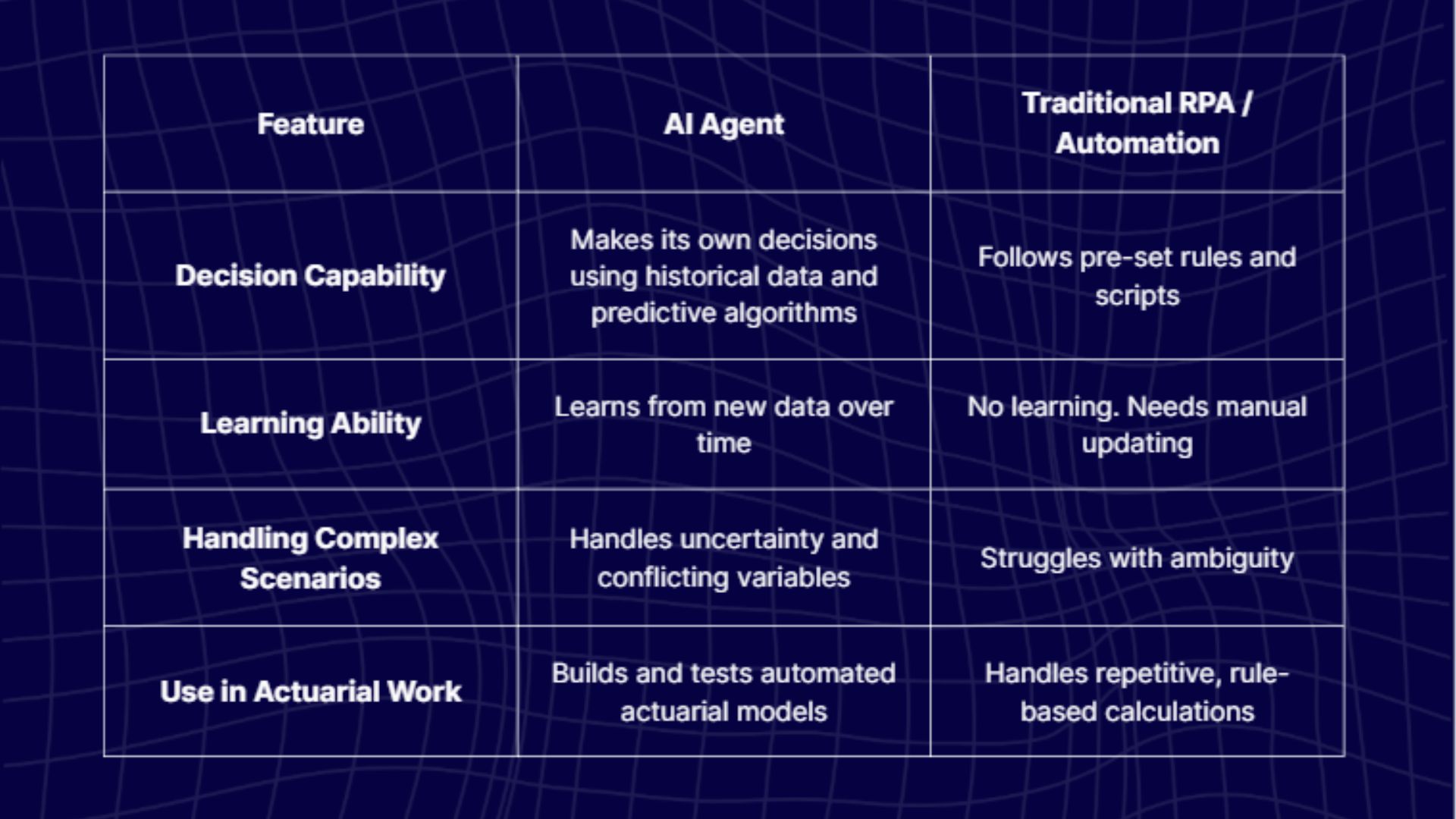
Insurance is fundamentally a business built around uncertainty. An insurer does not know exactly which policyholders will file claims, when those claims will occur, or how expensive individual losses will become. What makes insurance workable is the ability to analyze a sufficiently large portfolio and estimate the range of possible outcomes.
Mortality models help insurers study patterns of death and longevity. Morbidity models address illness and disability experience. Frequency-severity models provide a framework for more common property and casualty losses, while catastrophe models help insurers examine rare events with potentially severe financial consequences.
These models do not eliminate uncertainty. They make uncertainty easier to measure, analyze, and incorporate into financial decisions.
That is the practical role of actuarial science. By combining historical experience, probability, statistics, and financial assumptions, actuaries help insurers estimate expected claims, evaluate future obligations, develop pricing models, and assess how much financial capacity may be needed when actual results differ from expectations. The models will never make the future perfectly predictable. They provide something more realistic: a structured way to make financial decisions when the future is inherently uncertain.