
Insurance works by pooling risk. Many policyholders contribute premiums to a common pool, while the insurer uses that pool to pay covered losses suffered by the smaller share of customers who make claims. The model sounds straightforward until information and behavior enter the picture. An insurer rarely knows everything about a customer's risk, and buying insurance can sometimes change how a person responds to that risk.
That creates a classic economic problem known as asymmetric information: one side of a transaction may know something relevant that the other side cannot observe easily or completely. Two concepts are especially important here. Adverse selection occurs when differences in private information affect who chooses to buy or retain insurance, while moral hazard refers to changes in behavior after insurance protection is in place. Together, they help explain why insurers use underwriting, deductibles, claims histories, risk classifications, and other mechanisms when designing insurance products.
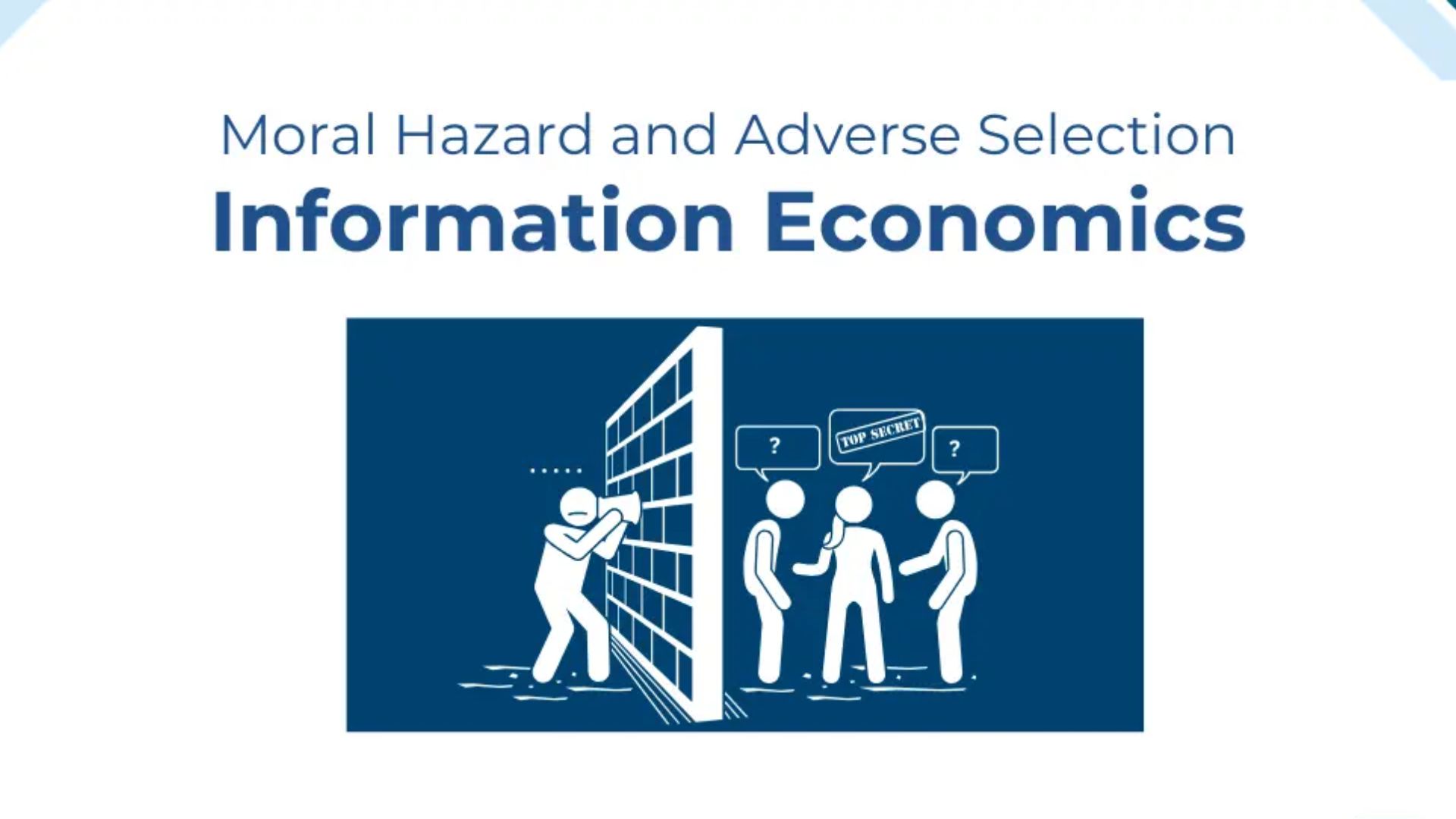
In a simplified economic model, an insurer would know everything necessary to evaluate each customer's risk. Real markets do not work that way. A driver knows more about personal driving habits than an insurer can observe directly. A homeowner knows the condition of a property from day-to-day experience. A business owner may have information about workplace practices that is difficult for an outside insurer to measure completely.
Insurers can gather additional information through applications, inspections, claims histories, loss records, medical information where permitted, and other underwriting sources. Even so, some characteristics remain difficult or expensive to observe. The result is an information gap between the parties to the insurance contract.
That gap matters because insurance prices are based on expected risk. If the insurer cannot accurately distinguish among risks, the premium charged to one group may not accurately reflect the costs associated with the individual risks inside that group. The problem becomes especially important when the people who know they are more likely to claim behave differently from those who perceive themselves as lower risk.
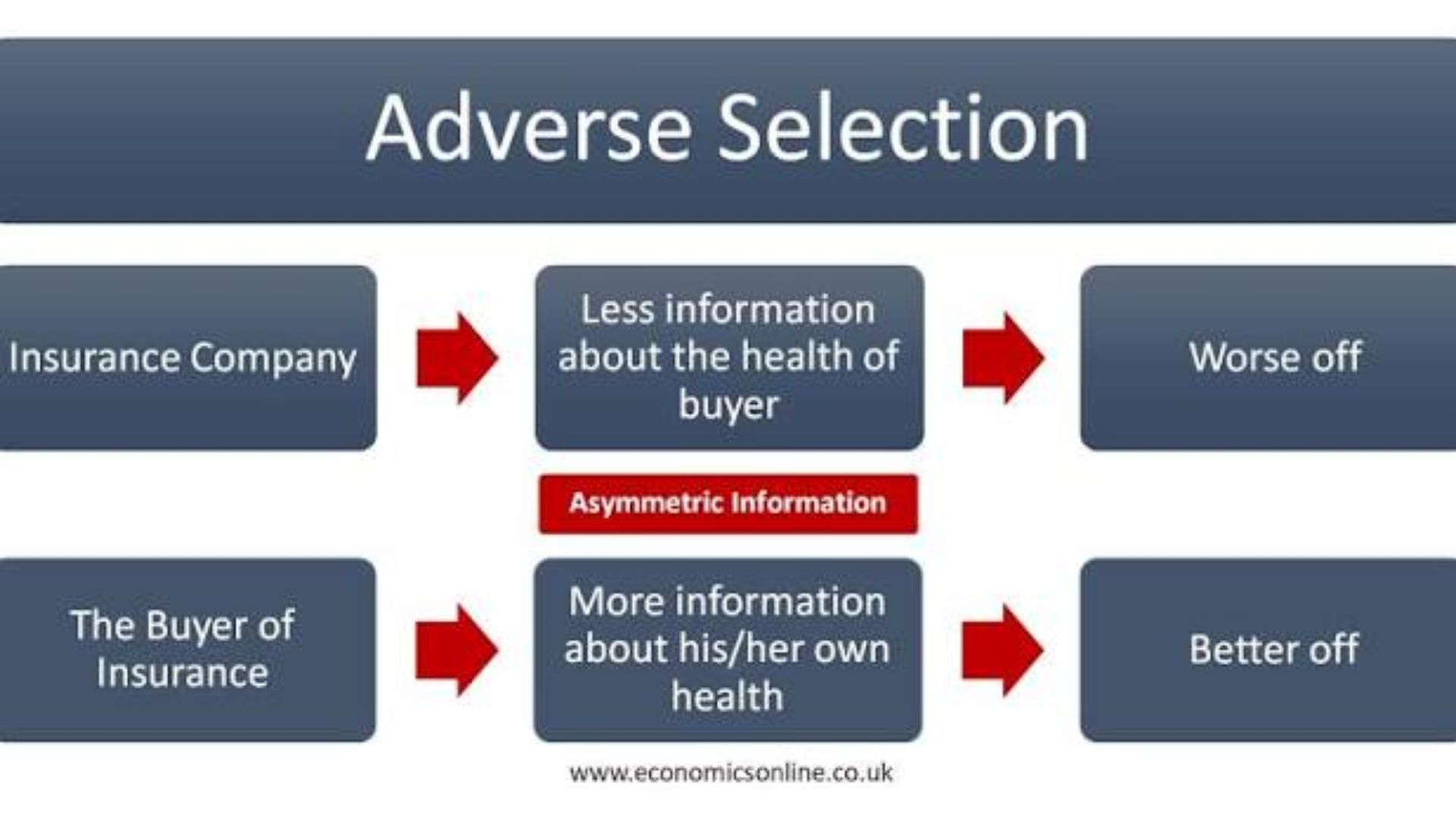
Adverse selection generally occurs before an insurance contract is entered into or renewed. The basic idea is that people with a higher expected need for insurance may have stronger incentives to purchase or retain coverage, while lower-risk individuals may be more sensitive to the price.
Imagine a simplified insurance market in which every applicant is charged exactly the same premium, regardless of expected medical costs. Someone who expects substantial healthcare expenses may view the premium as attractive because the anticipated benefits could be large. A healthy person who expects little medical spending may reach the opposite conclusion and decide that the coverage is not worth the price.
If enough lower-risk participants leave the pool, the average expected cost of the remaining group can rise. The insurer may then need to increase premiums, which can make coverage even less attractive to some lower-risk participants. In severe cases, this feedback loop can weaken the risk pool and make the market increasingly difficult to sustain.
The real-world outcome depends heavily on regulation, product design, subsidies, enrollment rules, risk adjustment, and other market features. The simplified example is useful because it shows the underlying economic mechanism without assuming that every insurance market operates in the same way.

Insurers use underwriting to improve their understanding of the risks they are taking on. The specific information available varies by product and by regulatory environment.
For property insurance, underwriting may involve information about the property's construction, location, age, prior claims, and exposure to particular hazards. Auto insurers may consider driving-related information, vehicle characteristics, territory, claims experience, and other permitted rating factors. Life and health-related products can involve additional information subject to applicable laws and underwriting rules.
The purpose is not simply to identify “good” and “bad” customers. It is to estimate differences in expected risk more accurately and incorporate those differences into the insurance product where the market and regulations permit it.
Underwriting cannot eliminate adverse selection entirely. It can, however, reduce some of the information imbalance that makes risk pooling more difficult.
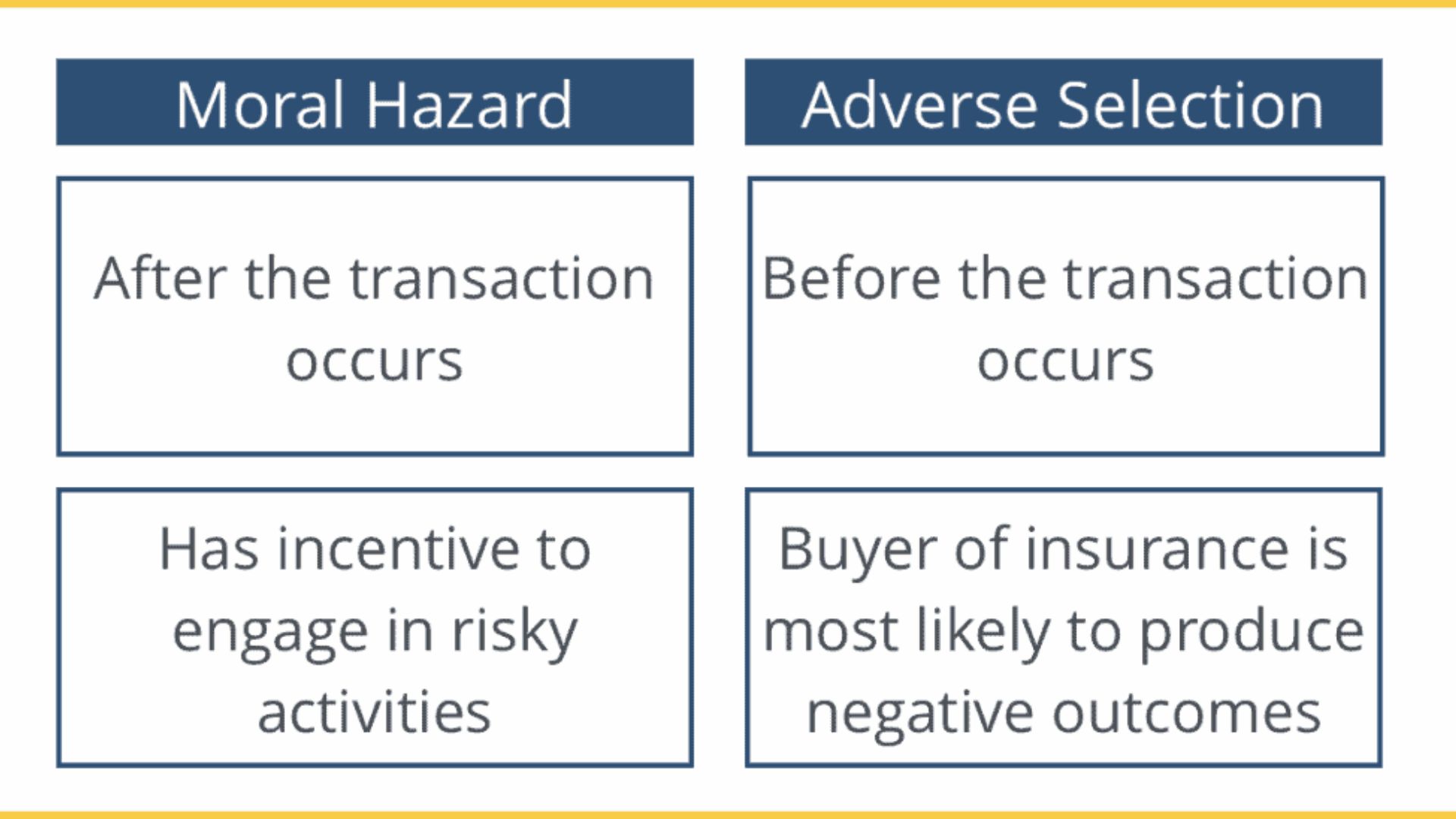
Adverse selection concerns information and choices surrounding entry into an insurance pool. Moral hazard focuses on what can happen after coverage is in place.
When insurance absorbs part of the financial consequences of a loss, the policyholder may have less direct financial incentive to avoid that loss. Economists describe this as a change in incentives. It does not necessarily mean that a person becomes dishonest or intentionally causes damage. The behavioral change can be much more subtle.
Consider automobile insurance. A driver who bears the full financial cost of every potential accident has a direct incentive to reduce exposure to loss. Once insurance covers a substantial portion of a covered loss, some of that financial consequence shifts to the insurer. The driver's incentives may therefore change at the margin.
A similar principle can appear in commercial insurance. A company with substantial liability protection may still have strong reasons to maintain safety programs, but the insurance coverage can alter how the company weighs the financial consequences of different risk-management decisions.
Moral hazard is therefore best understood as an incentive problem, not simply as fraud or reckless behavior.
Insurers use several policy features to keep policyholders financially connected to the risks they insure.
Deductibles are one of the simplest examples. If a policy has a $1,000 deductible, the insured remains responsible for the first $1,000 of a covered loss before the insurer pays the remaining eligible amount. That arrangement gives the policyholder a continuing financial stake in preventing or limiting smaller losses.
Coinsurance and copayments can create a similar effect in certain health insurance arrangements by requiring the insured to bear part of an eligible expense. The exact structure varies substantially between insurance products.
Experience rating is another mechanism. Under an experience-rated arrangement, historical claims experience can influence future premiums or other financial terms. This can make pricing more responsive to the actual loss experience of a policyholder or business, although claims history is not a perfect measure of underlying risk and can be influenced by factors other than behavior.
These mechanisms do not eliminate moral hazard. They change the incentives surrounding insured losses and can reduce the extent to which insurance coverage removes the policyholder's financial exposure.
The two concepts are closely related but describe different stages of the insurance relationship.
Economic problemMain timingCore issueTypical responseAdverse selectionBefore or around contract formationDifferences in private information affect who seeks or retains coverageUnderwriting, risk classification, eligibility rules, risk adjustmentMoral hazardAfter coverage beginsInsurance changes incentives or behaviorDeductibles, coinsurance, monitoring, claims management, experience rating
The distinction is useful because the solutions are different. Underwriting primarily addresses what the insurer knows about a risk before accepting it. Deductibles and other cost-sharing mechanisms primarily address incentives after the policy is already in force.
In practice, however, the boundary is not always perfectly clean. Insurance markets use combinations of information gathering, contract design, pricing, monitoring, and regulation to address both problems.
Technology has created new ways for insurers to gather information about risk. Telematics in automobile insurance is a useful example. Depending on the program, telematics systems can provide information about mileage, braking, acceleration, driving times, or other aspects of driving behavior.
That information can reduce part of the information gap between the driver and the insurer. Instead of relying solely on broad historical averages or traditional rating variables, an insurer may have access to additional evidence about actual driving patterns, subject to applicable rules and the design of the program.
Telematics can also affect behavior. If drivers know that certain driving patterns are being measured and that those patterns may influence insurance terms, they may have an additional incentive to drive more cautiously.
For that reason, telematics can interact with both sides of the information problem, although it is more precise to say that it reduces information asymmetry and may influence post-contract behavior rather than claiming that it directly “solves” adverse selection.
Adverse selection and moral hazard are not signs that insurance markets are fundamentally broken. They are recurring economic challenges that insurers, regulators, and consumers have to manage.
Adverse selection can make it harder to estimate the average risk of an insurance pool when participants have private information about their own likelihood of claiming. Moral hazard can affect the incentives of people or businesses after they obtain coverage. Both problems can influence claims costs, pricing, product design, and the stability of risk pools.
The tools used to address them are therefore varied. Underwriting helps insurers gather and evaluate information. Deductibles and coinsurance preserve some financial exposure for policyholders. Experience rating can incorporate claims history into future pricing. Monitoring and technology can provide additional information about insured risks. Regulation can also shape which information insurers may use and how insurance products can be priced.
Insurance depends on pooling uncertain risks, but effective pooling requires more than collecting premiums from a large number of people. The insurer also needs a workable way to estimate the risks entering the pool and to structure contracts that provide appropriate incentives after coverage begins.
That is where adverse selection and moral hazard become useful concepts. Adverse selection is mainly an information problem surrounding participation and risk classification. Moral hazard is mainly an incentive problem that can emerge after insurance protection changes the financial consequences of a loss.
Neither problem has a single universal solution. Insurance markets respond with a combination of underwriting, pricing, contract design, monitoring, regulation, and risk-management practices. Understanding those mechanisms makes it easier to see why an insurance policy contains deductibles, eligibility rules, risk classifications, and other features that may seem complicated at first glance.