
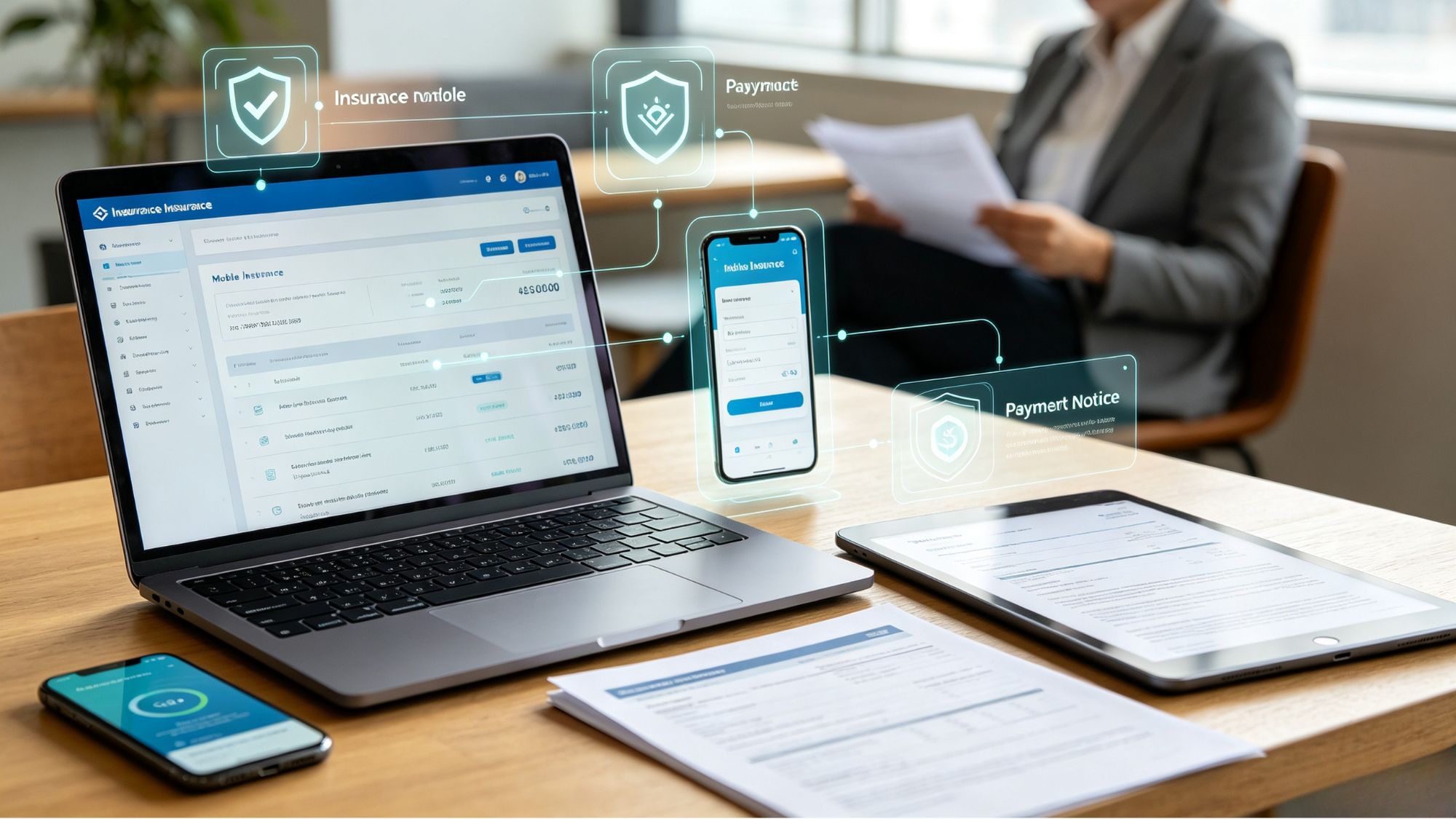
The way people manage insurance policies has changed significantly as insurers move from paper-based processes to digital platforms. Instead of relying only on mailed documents, phone calls, and physical payment methods, policyholders can now review coverage details, submit claims, access proof of insurance, and manage premium payments through online tools.
However, digital insurance platforms are not all designed for the same purpose. Self-service web portals, mobile applications, and automated payment systems each provide different advantages and limitations. Understanding how these tools work together helps policyholders manage their coverage more efficiently while avoiding common issues such as missed updates, outdated information, or unnoticed premium increases.
Online insurance portals are the foundation of most digital insurance systems. Accessible through desktop browsers, these platforms provide policyholders with a centralized location for reviewing and managing their insurance accounts.
Web portals are particularly useful for tasks that require detailed review or document handling. Insurance policies often contain extensive information, including coverage limits, deductibles, exclusions, endorsements, and renewal terms. Reviewing these details on a larger screen makes it easier to understand how a policy is structured.
Common functions available through online portals include:
Viewing current policy declarations pages.
Downloading insurance documents and billing records.
Reviewing past payments and renewal information.
Updating personal information such as addresses or contact details.
Uploading supporting documents for claims.
For example, a homeowner reviewing a renewal notice may use the online portal to compare current coverage limits with previous policy periods and identify whether changes are needed before the renewal date.
Desktop portals are often more suitable for major account adjustments because they provide a broader view of policy information. Changing coverage limits, adding endorsements, or reviewing multiple insurance products can be difficult on smaller mobile screens.
For households managing several policies—such as homeowners, auto, umbrella liability, or rental property insurance—a web portal provides a more organized environment for reviewing the overall insurance portfolio.

Insurance mobile applications extend policy management beyond the desktop environment. Designed for smartphones and tablets, these apps focus on quick access, convenience, and immediate communication.
One of the most common uses of insurance mobile apps is accessing proof of coverage. Many auto insurance applications allow policyholders to store digital insurance identification cards on their devices. Many U.S. states recognize digital insurance ID cards as valid proof of coverage, although requirements may vary by jurisdiction.
Having insurance information available through a smartphone can be useful during situations such as:
Traffic stops requiring proof of insurance.
Vehicle accidents where policy details are needed quickly.
Rental vehicle transactions.
Emergency communication with an insurance provider.
Instead of searching through paper documents or email attachments, policyholders can access essential information directly from their phones.
Mobile applications are also valuable during the early stages of an insurance claim. Many insurers allow users to submit a First Notice of Loss (FNOL) through their apps after an accident or property incident.
Depending on the insurer and policy type, mobile claim features may allow users to:
Upload photographs of damage.
Provide incident details.
Track claim progress.
Communicate with claims representatives.
For example, after an auto accident, a policyholder may use a mobile app to document vehicle damage immediately, reducing delays in the initial claim reporting process.
However, mobile apps are generally designed for speed rather than detailed policy analysis. Complex decisions involving coverage changes, exclusions, or long-term insurance planning are often easier to complete through a desktop portal or direct communication with an insurance professional.

Automated payment systems have become a standard feature in modern insurance management. Electronic funds transfer (EFT), recurring credit card payments, and digital payment options allow policyholders to maintain continuous premium payments without manually processing each bill.
The primary advantage of automated payments is convenience. Insurance policies typically require payments according to specific schedules, and missed payments can lead to cancellation notices or coverage interruptions.
Automatic billing helps reduce administrative mistakes by ensuring premiums are processed according to the selected payment arrangement.
For individuals managing multiple insurance policies, automated payments can simplify routine financial tasks and reduce the chance of overlooking a payment deadline.
While automatic payments improve convenience, they can also create a risk: policyholders may stop reviewing their insurance costs regularly.
Insurance premiums can change at renewal because of factors such as:
Regional risk changes.
Increased repair or replacement costs.
Updated underwriting evaluations.
Changes in insurance regulations.
Because payments occur automatically, a premium increase may go unnoticed if policyholders do not review renewal documents carefully.
A balanced approach is to keep automatic payments active while scheduling an annual insurance review. This allows policyholders to benefit from payment convenience while still evaluating whether coverage remains appropriate and competitively priced.
Because insurance platforms store sensitive information, security should be an important consideration when using digital services. Insurance accounts may contain personal information, payment details, property information, and claim records.
When managing policies online, users should consider several security practices:
Enable multi-factor authentication (MFA) when available.
Use strong, unique passwords for insurance accounts.
Avoid accessing insurance accounts through unsecured public networks.
Keep mobile devices protected with biometric authentication or device passwords.
Regularly review account activity and notification settings.
A secure digital insurance experience depends not only on the insurer’s technology but also on responsible account management by the policyholder.

Different digital insurance tools serve different purposes. Selecting the right platform for a specific task improves efficiency and reduces confusion.
A practical approach includes:
Use web portals for reviewing detailed policy documents, managing coverage changes, and handling complex account information.
Use mobile applications for quick access to insurance cards, claim reporting, and real-time communication.
Use automated payment systems for maintaining consistent premium payments while continuing to review renewal terms.
Rather than replacing traditional insurance services completely, digital platforms work as additional tools that improve access and convenience.
Digital insurance platforms have transformed how policyholders interact with coverage, claims, and payments. Self-service portals provide detailed policy management, mobile applications offer immediate access during everyday situations and emergencies, and automated payment systems simplify premium administration.
However, convenience should not replace active insurance management. Reviewing policy changes, monitoring renewal costs, maintaining account security, and understanding the purpose of each digital tool allow policyholders to make better decisions about their coverage. When used properly, digital insurance platforms provide a more organized and efficient way to manage modern insurance needs.