
Insurance has long depended on actuarial models to estimate how likely different types of losses are to occur. Actuaries study historical claims, group risks into meaningful categories, and use statistical methods to estimate future outcomes. Those methods remain important, but the amount and variety of data available to insurers have changed dramatically. Telematics, connected devices, geospatial information, claims records, and other digital data sources can now provide a much more detailed view of individual risks. As a result, insurers are increasingly exploring machine learning and other artificial intelligence techniques alongside traditional actuarial methods.
The change is not simply a matter of replacing an old spreadsheet with a new algorithm. It is a shift toward models that can examine more variables, identify relationships that may be difficult to capture with conventional techniques, and incorporate new information as it becomes available. For underwriters, that can mean a more detailed risk assessment. It also creates new questions about transparency, data quality, fairness, and how automated decisions should be governed.
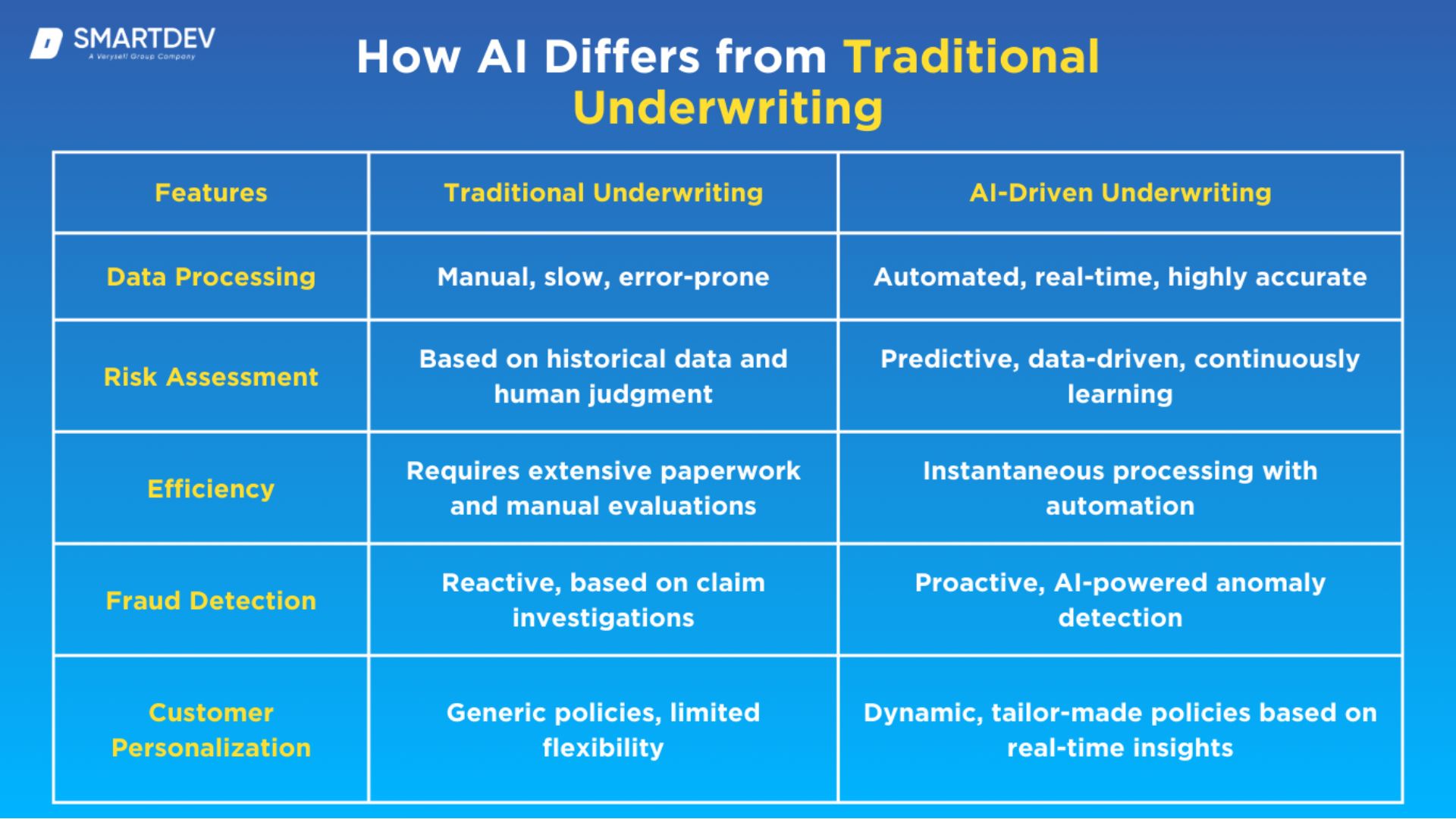
Traditional actuarial methods are designed to find reliable patterns in historical data. An actuary may examine years of claims information and divide policyholders into groups according to factors that have historically been associated with different levels of loss. The approach has a major advantage: it is grounded in established statistical principles and can often be explained clearly.
The limitation is that broad categories can hide meaningful differences between individual risks. Two drivers may share the same age and general location but have very different driving patterns. Two commercial buildings may have similar construction characteristics while facing different levels of exposure because of their locations, maintenance practices, or surrounding conditions.
Another challenge is the pace at which relevant information changes. Actuarial assumptions and rating models must be reviewed and updated as new evidence becomes available, but conventional processes can take time. New vehicle safety systems, changing weather patterns, economic conditions, and emerging claims trends can create relationships that older datasets do not fully capture.
Traditional models also have to make choices about which variables are useful and how they should interact. That does not make them ineffective. It simply means that some complex relationships may be difficult to represent using relatively fixed assumptions or predefined rating structures.
Machine learning offers another approach.
Machine learning models are designed to identify patterns across large datasets. Rather than relying only on a predetermined set of relationships, an algorithm can evaluate many variables and interactions to determine which combinations are associated with different outcomes.
For insurance underwriting, this can create several potential advantages.
Higher-dimensional analysis. A machine learning system can examine a large number of features at the same time. Depending on the insurance line and the data available, those features might include property characteristics, historical claims, geographic conditions, vehicle information, or behavioral data.
Pattern recognition. Algorithms can identify relationships that may not be obvious when variables are considered separately. A combination of factors may have a stronger relationship with loss frequency than any single factor on its own.
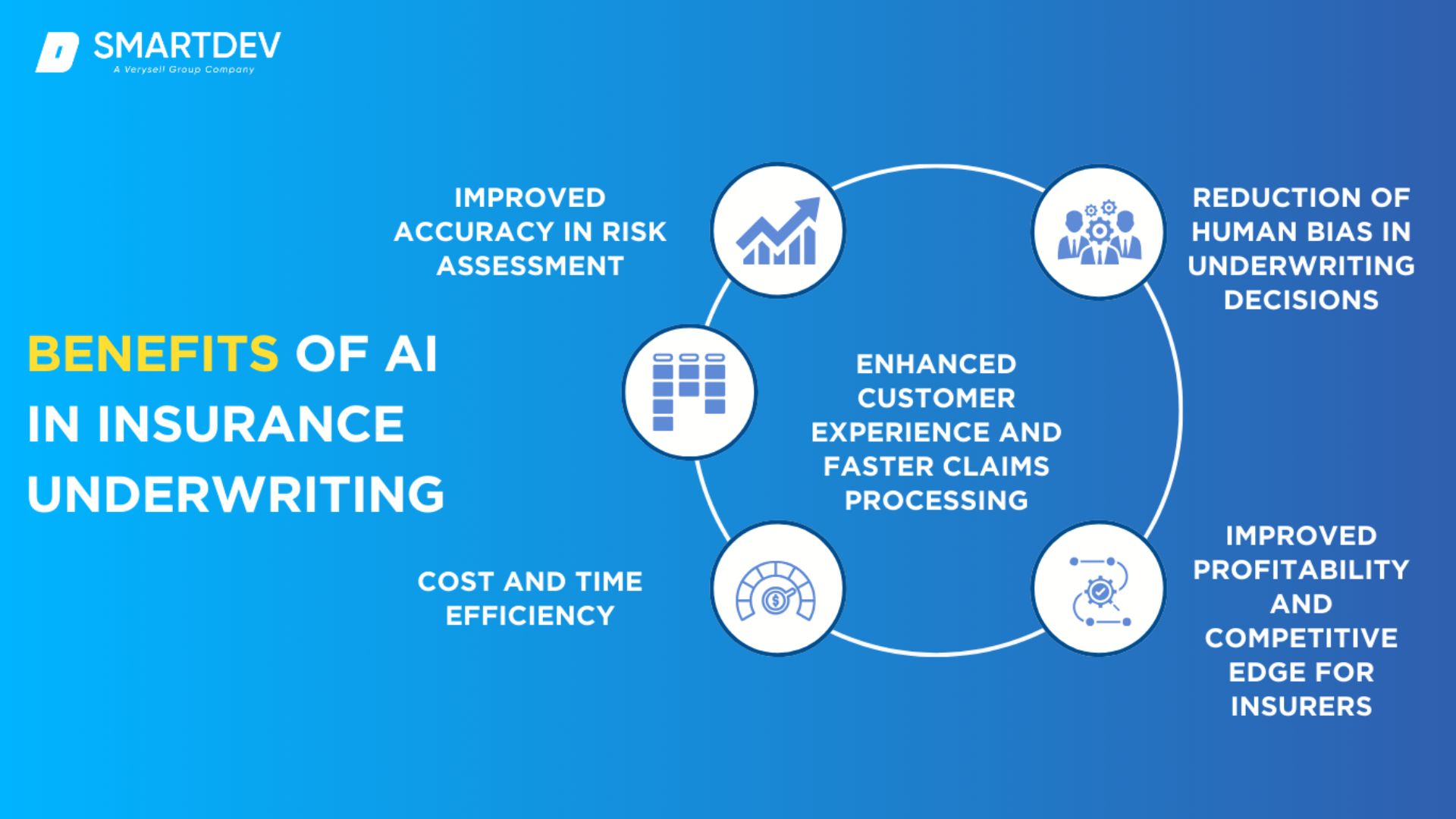
Faster processing. Once a model has been trained, validated, and integrated into an underwriting workflow, it can evaluate large volumes of applications quickly. This can help insurers automate parts of the risk assessment process while leaving more complex cases for human review.
Model updates. Some machine learning systems can be retrained or recalibrated as new information becomes available. In practice, however, model updates are normally subject to testing, validation, documentation, and internal governance rather than being changed automatically every time new data arrives.
That last point matters. A production insurance model is not simply an algorithm running without supervision. Insurers have to consider data quality, model performance, regulatory requirements, explainability, and operational controls.
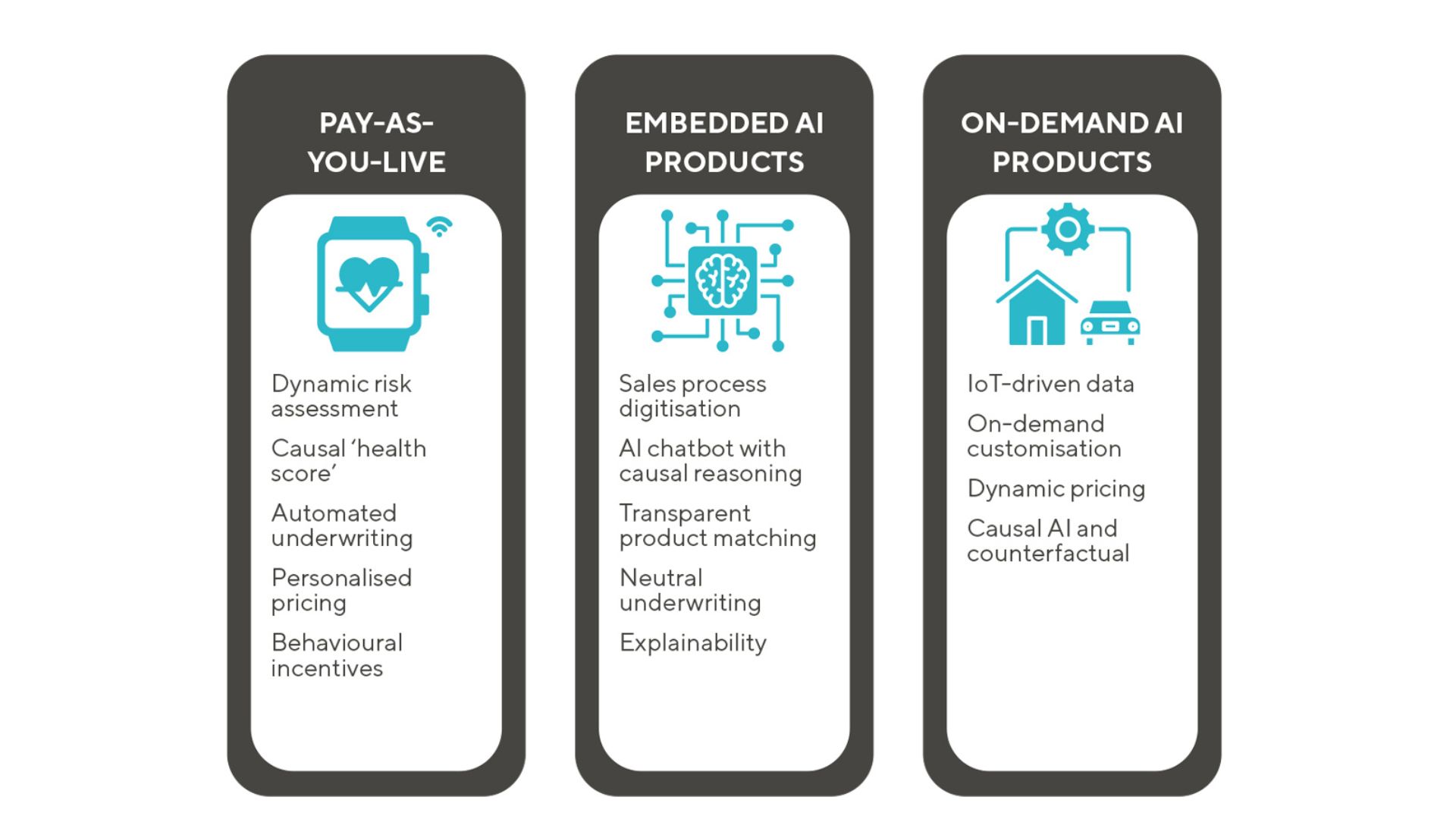
Usage-based insurance provides one of the clearest examples of how dynamic data can influence risk assessment.
Telematics systems can collect information about driving behavior, such as acceleration, braking, mileage, time of travel, and other characteristics of vehicle use. Depending on the insurance program, that information can be evaluated alongside traditional underwriting variables.
The important difference is that the risk picture can evolve over time. A conventional rating factor may remain unchanged for a relatively long period, while telematics data can provide a more current view of how a vehicle is being used.
That does not necessarily mean a driver's premium changes immediately after every trip. The insurer determines how collected data is interpreted, how often scores are calculated, and whether those scores affect future pricing. In some programs, sustained changes in driving behavior may contribute to a revised risk assessment or future premium adjustment.
The broader idea is more significant than any individual data point: underwriting can become an ongoing process rather than a decision based almost entirely on information available when the policy was first issued.
Commercial property insurance offers another potential application.
A property risk model might combine historical claims with information about building characteristics, geographic exposure, weather conditions, satellite imagery, or data from connected sensors. Internet of Things devices can provide additional information about conditions inside a facility, including temperature, equipment status, or water leaks.
Consider a warehouse that adds leak-detection sensors and upgrades its fire protection equipment. Those changes may reduce certain types of property risk, but a traditional underwriting process may not immediately reflect every improvement. A data-driven system can potentially incorporate updated property information more frequently.
Again, the technology does not automatically determine the final insurance price. Underwriting rules, policy terms, regulatory requirements, and human review still matter. The value of dynamic scoring is that it can give insurers a more current set of inputs when evaluating risk.
More data does not automatically produce a better underwriting model.
Machine learning systems depend heavily on the quality and relevance of the information used to train and operate them. Incomplete records, outdated information, inconsistent data collection, or biased historical claims can all affect model performance.
There is also a difference between correlation and causation. A model may discover that a particular variable is associated with higher claim frequency without establishing that the variable itself causes the higher risk. That distinction becomes especially important when the variable is closely related to socioeconomic conditions or other characteristics that may raise fairness concerns.
For insurers, data governance therefore becomes part of the underwriting process. Questions about where data came from, whether it is accurate, how long it should be retained, and whether it is appropriate for underwriting can be just as important as the algorithm itself.
One of the most discussed concerns surrounding machine learning in insurance is explainability.
Traditional rating systems can often be described using relatively straightforward factors and rules. More complex machine learning models may involve hundreds of variables and interactions that are difficult to explain in plain language.
That creates a practical problem. If an applicant receives a different underwriting outcome because of a model, the insurer may need to explain the relevant factors and demonstrate that the process complies with applicable requirements. A model that produces accurate predictions but cannot be adequately governed or explained may be difficult to use in a regulated insurance environment.
This is one reason insurers may favor interpretable models in certain applications or use additional tools to examine which variables are contributing most strongly to a model's output.
The goal is not necessarily to make every algorithm simple. It is to make the overall decision process sufficiently understandable, testable, and accountable.
Fairness is another major issue.
Historical insurance data reflects the world in which it was collected. If that history contains systematic differences or biases, a machine learning model may reproduce some of those patterns even when protected characteristics are not explicitly included.
The problem can become more subtle when a model relies on proxy variables. A geographic area, purchasing pattern, or other seemingly neutral feature may correlate with characteristics that regulators consider sensitive or inappropriate for a particular underwriting decision.
For this reason, insurers need to evaluate more than predictive performance. They may also need to test models for disparate outcomes, document the variables being used, monitor model behavior over time, and establish procedures for reviewing unexpected results.
Regulatory expectations vary by jurisdiction and insurance line, so there is no universal checklist that applies to every model. What is consistent is the need for insurers to treat automated underwriting as a governed business process rather than an isolated technical experiment.
The most realistic view of AI-driven underwriting is not that machine learning will simply eliminate traditional actuarial methods.
Actuarial expertise remains important for understanding claims data, designing rating structures, evaluating uncertainty, and interpreting statistical results. Machine learning can add another layer of analytical capability, particularly when datasets become too large or complex for conventional approaches alone.
In practice, the two approaches can work together. An insurer might use actuarial analysis to establish a foundation, machine learning to identify additional patterns, and human experts to review the resulting model and determine how it should be incorporated into underwriting.
That combination can provide a useful balance between predictive performance and interpretability.
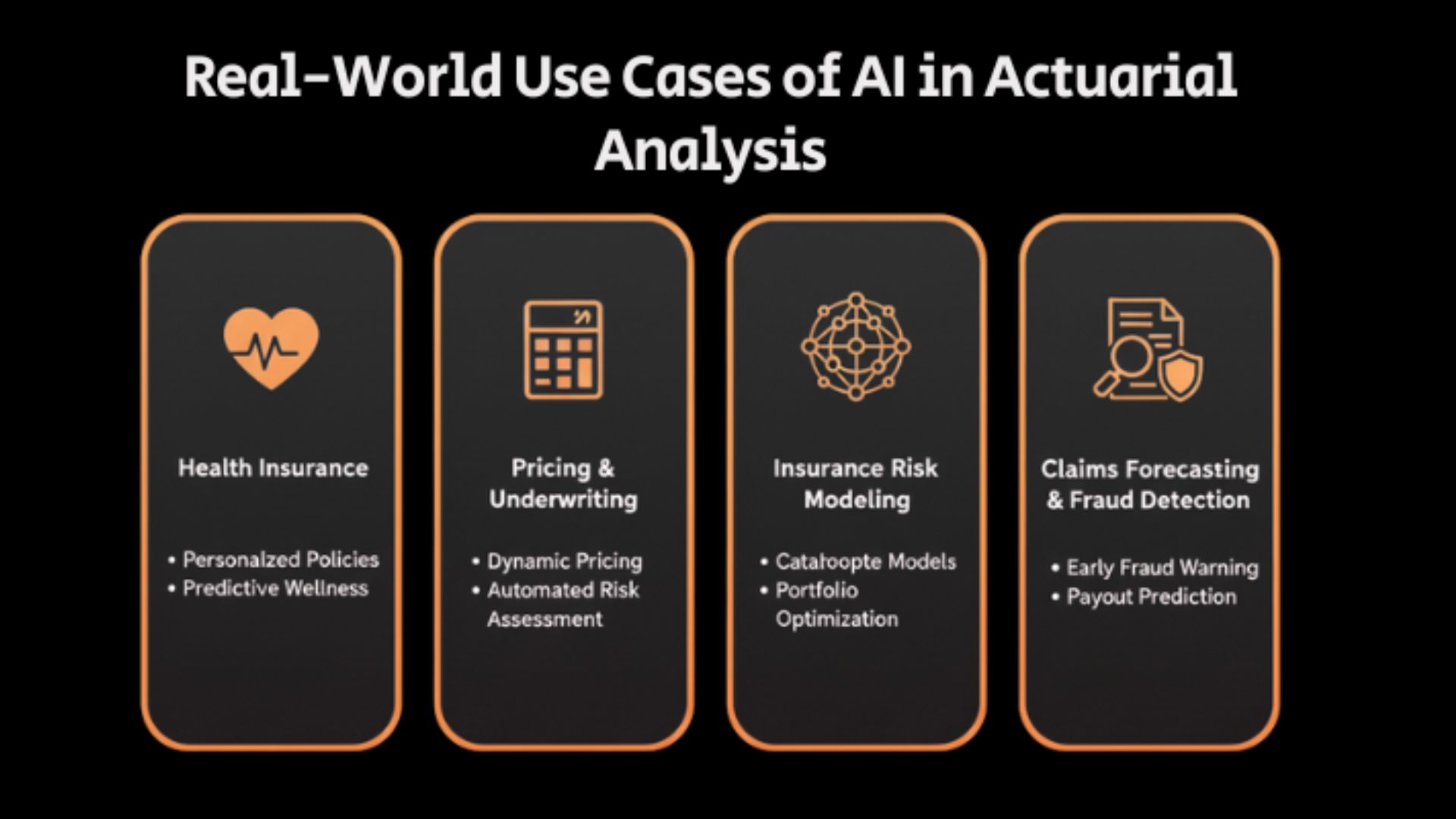
The evolution toward dynamic risk scoring is likely to continue as insurers gain access to more connected data and better analytical tools. The most meaningful changes may not come from one breakthrough algorithm. They may come from the gradual integration of better data, stronger model governance, faster processing, and more responsive underwriting workflows.
There are limits, though. Data availability does not guarantee accuracy. A sophisticated model can still produce poor results if it is trained on weak data or used outside the conditions for which it was developed. Regulatory requirements can also limit which variables insurers may use and how automated decisions can be implemented.
For that reason, the future of insurance underwriting is unlikely to be purely automated. A more plausible direction is a hybrid model in which machine learning handles increasingly complex analytical tasks while actuaries, underwriters, compliance teams, and other specialists remain responsible for interpretation and oversight.
Dynamic AI risk scoring is changing how insurers think about risk, but the underlying objective has not changed: use available evidence to estimate uncertainty as accurately and responsibly as possible. Machine learning expands the range of information that can be considered. It does not remove the need for judgment, statistical discipline, or regulatory accountability.