
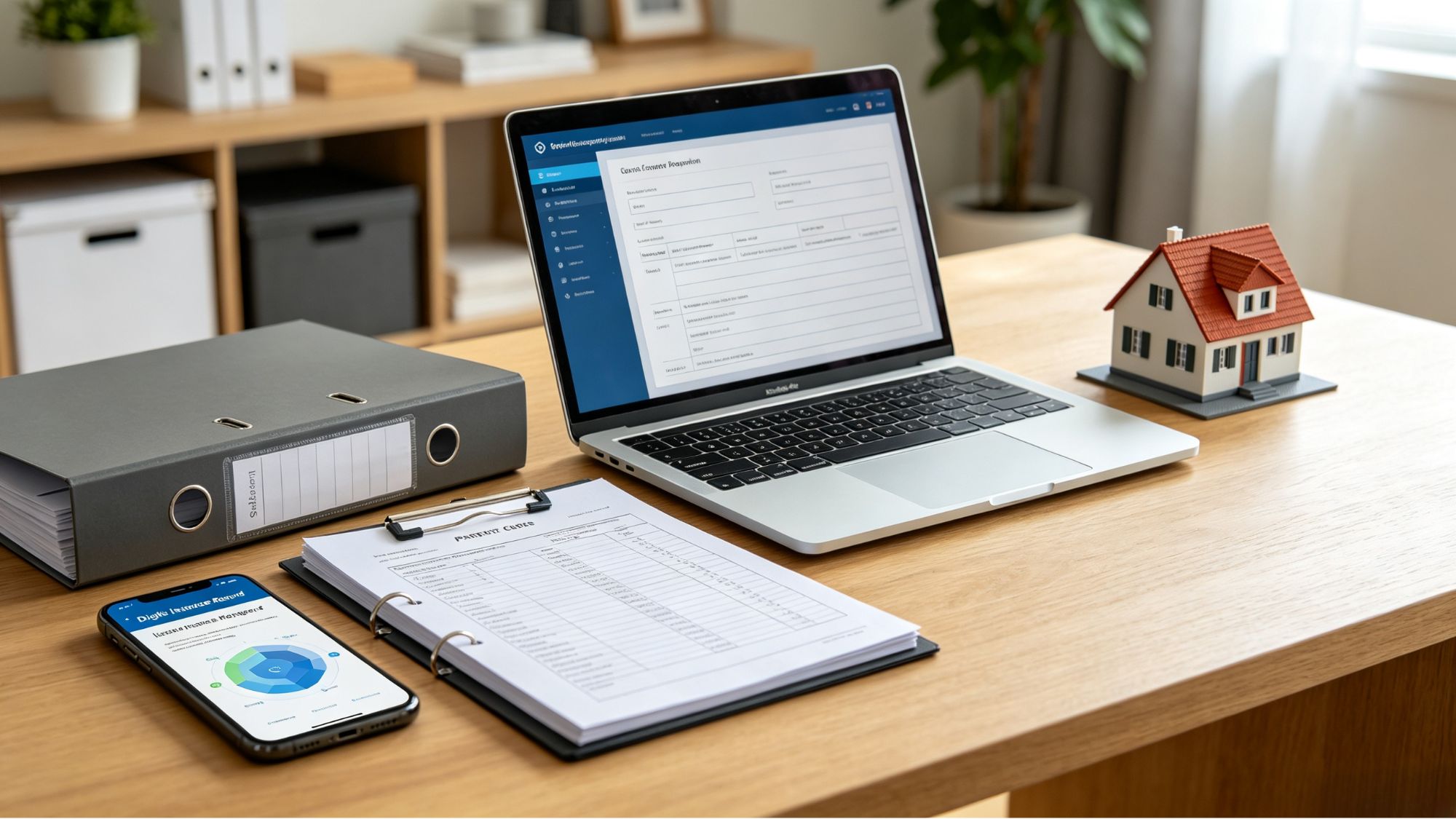
When a natural disaster occurs, insurance documents often become one of the most important resources for beginning the recovery process. Wildfires, hurricanes, floods, and severe storms can force families to evacuate quickly, leaving physical paperwork behind and making it difficult to access important policy information when it is needed most.
Many policyholders store insurance documents in filing cabinets, email accounts, or local computer folders without considering how easily those records can become inaccessible during an emergency. Without quick access to declarations pages, policy numbers, coverage details, and claims contacts, filing an insurance claim can become slower and more stressful.
A well-organized emergency insurance documentation system helps policyholders maintain access to critical records before, during, and after a disaster. By combining secure digital storage, organized physical copies, and updated property records, individuals can create a reliable system that supports faster communication with insurers and smoother claims management.
Many households still rely on traditional storage methods, such as paper folders or files saved only on personal computers. While these methods may work during normal circumstances, they can create significant challenges during a disaster.
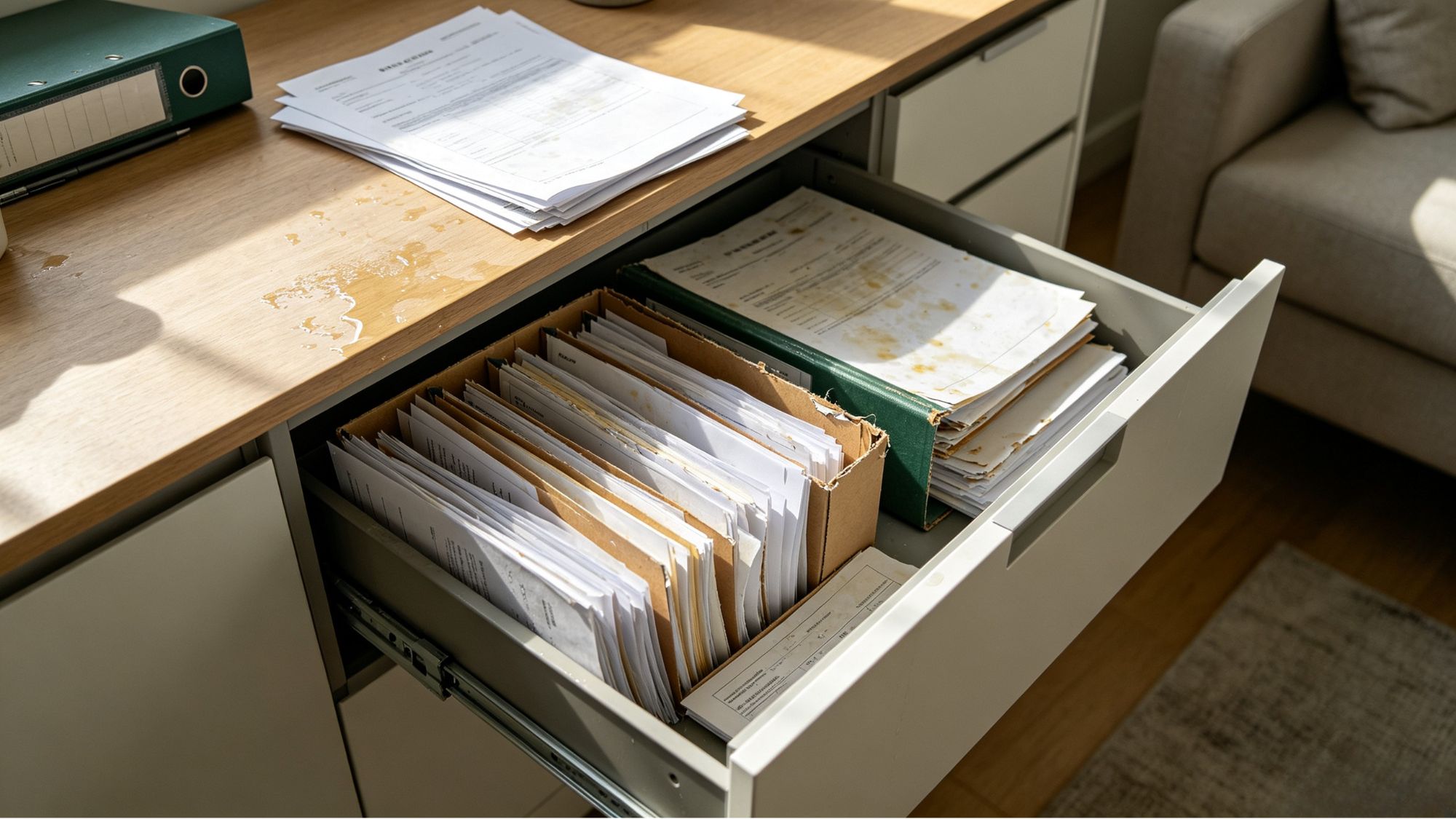
Paper insurance documents stored at home are vulnerable to many types of damage. Fires, floods, and structural damage can destroy important records or make them impossible to retrieve for an extended period.
Even documents stored inside a home safe may not be immediately accessible if authorities restrict access to a damaged area after a major disaster. During the first stages of recovery, policyholders may need insurance information while they are staying at a temporary location away from their property.
Digital files stored only on a home computer create another potential problem. If a laptop, desktop computer, or external drive remains inside an evacuated property, policyholders may lose access to essential insurance records.
A disaster-ready system should allow access from multiple locations while maintaining appropriate security protections. Cloud-based storage with encryption and strong account security features can provide a practical way to retrieve documents remotely when local devices are unavailable.
An effective emergency documentation strategy combines two forms of protection: a physical emergency file for immediate needs and a secure digital archive for long-term access.
Although digital storage is essential, a small physical document kit remains useful during power outages or situations where internet access is unavailable.
A water-resistant folder or portable binder stored in an easily accessible location can include:
Current insurance policy numbers
Insurance company claims phone numbers
Agent or broker contact information
Copies of identification documents
Property ownership records
A summary of valuable possessions and scheduled items
The goal of this emergency binder is not to replace the complete insurance archive. Instead, it provides quick access to the most important information needed during the first hours after an incident.
The primary insurance document archive should be stored digitally and organized for quick retrieval. Important files may include:
Insurance declarations pages
Policy contracts
Coverage endorsements
Renewal notices
Previous claim records
Property inventories
Receipts for major purchases
Using encrypted cloud storage and enabling multi-factor authentication can help protect sensitive information while allowing access from smartphones, tablets, or other devices during emergencies.

During a disaster, people often have limited time and high stress levels. A complicated filing system can make it difficult to locate important information quickly. A simple and consistent structure improves accessibility.
A practical insurance archive can be organized by insurance category:
Home and Property Insurance
Current policy documents
Renewal notices
Property inventory
Home improvement records
Auto Insurance
Policy declarations
Vehicle information
Accident records
Repair documentation
Health and Personal Insurance
Health coverage documents
Life insurance policies
Disability insurance records
Claims Records
Claim numbers
Adjuster communications
Repair estimates
Receipts and reimbursement records
Keeping each insurance category separate helps users locate specific documents without searching through unrelated files.
A consistent naming system makes digital archives easier to search. Instead of saving files with unclear names such as:
Insurance.pdf
a more useful format might include the date, insurer, and document type:
2026-06-01_StateFarm_Homeowners_Policy.pdf
This approach helps organize files chronologically and makes older records easier to identify.
One of the most challenging parts of an insurance claim after a major loss is proving ownership and estimating the value of damaged belongings.
A detailed property inventory created before a disaster can provide valuable supporting documentation.
Regularly updating photos and videos of a home and personal belongings creates a visual record of property condition before a loss occurs.
Useful documentation may include:
Room-by-room photographs
Video walkthroughs of the home
Images of electronics, appliances, furniture, and valuables
Receipts or purchase records for higher-value items
For example, recording a video walkthrough of a home while opening closets, cabinets, and storage areas can help document possessions that might otherwise be difficult to remember after a major loss.
These records should be stored separately from the physical property, preferably in a secure digital location that remains accessible during an emergency.
After a disaster, documentation does not stop after submitting a claim. Many insurance policies require policyholders to provide records of expenses related to temporary living arrangements or repairs.
If a home becomes temporarily uninhabitable, homeowners insurance may provide coverage for certain additional living expenses depending on the policy terms.
Keeping organized records of expenses such as:
Temporary accommodation
Transportation costs
Food expenses beyond normal spending
Emergency purchases
Temporary utility costs
can help support the claims process.
Creating a dedicated claims folder for each incident allows policyholders to store receipts, adjuster communications, repair estimates, and settlement documents in one location.
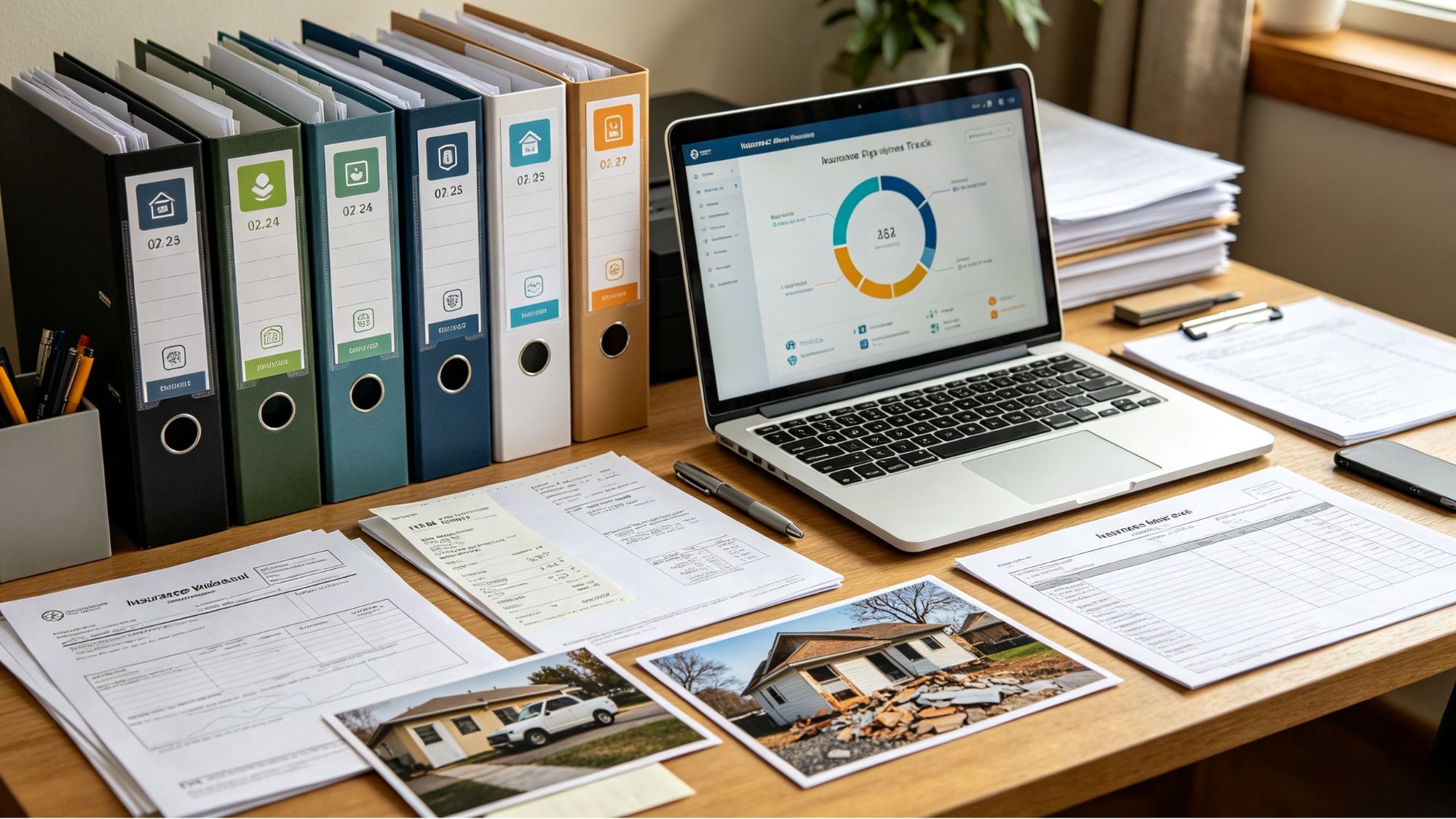
An emergency documentation system only remains effective if it stays current. Insurance policies, property values, and personal circumstances change over time.
A yearly review can help ensure that:
Current policy documents are saved
Contact information is accurate
New valuables are added to inventories
Expired documents are archived properly
Previous claims records remain accessible
Updating records during normal periods is much easier than trying to rebuild documentation after a disaster has already occurred.

A reliable insurance documentation system transforms emergency preparation from a last-minute task into an organized process. By maintaining both physical emergency records and secure digital archives, policyholders can access important coverage information even when normal routines are disrupted.
Organizing policies, claims records, and property documentation in advance helps reduce confusion during stressful situations and provides stronger support throughout the insurance claims process. A proactive approach to document management ensures that critical financial records remain available when they are needed most.