
A homeowner dealing with unexpected property damage may quickly learn that having an insurance policy does not automatically mean every loss will be covered. The outcome of a claim often depends on the exact language used to define covered causes of loss, exclusions, and policy conditions. Insurance contracts are designed around specific rules that determine when protection applies and when responsibility remains with the policyholder. Two common approaches used in property insurance are named perils and open perils coverage, and the difference between them affects how claims are evaluated.
Named perils and open perils represent two different methods for organizing insurance protection. A named perils policy identifies specific risks that are covered, while an open perils policy generally starts with broader protection and removes certain risks through exclusions. Neither structure automatically guarantees payment for every type of damage. The actual result depends on the complete policy language, including definitions, limitations, endorsements, and conditions. Understanding this structure allows consumers to read insurance documents more carefully and recognize why two policies with similar purposes may respond differently to the same event.
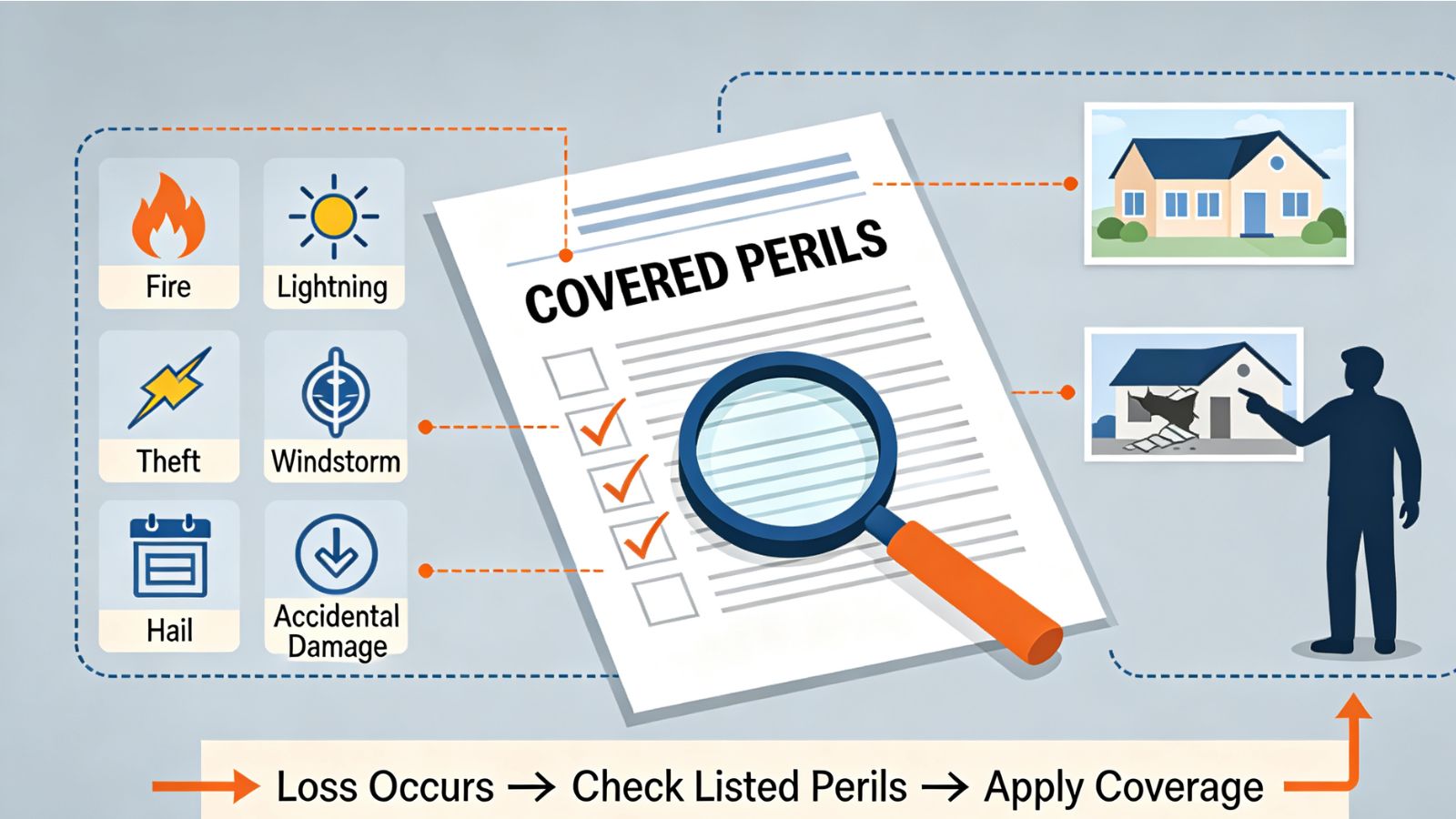
A named perils policy is built around a specific list of causes of loss that the insurance contract agrees to protect against. Instead of covering all possible events unless excluded, this type of policy identifies the risks that qualify for protection. Common examples of named perils in property insurance may include fire, lightning, theft, windstorm, hail, and certain types of accidental damage, depending on the policy wording, insurer, and jurisdiction.
The practical impact of this structure is that the cause of damage becomes a central part of the claim review process. A policyholder generally needs to show that the loss resulted from one of the listed perils before coverage can apply. If the event does not match the covered risks described in the contract, the loss may fall outside the policy unless another provision provides protection.
This approach can make the scope of protection easier to identify because the covered events are specifically listed. However, the same feature means that policyholders need to understand what is not included. A person may see that a policy covers property damage and assume that all accidental losses are included, but insurance contracts often define covered events much more narrowly. Reviewing the covered perils together with exclusions and endorsements provides a clearer picture of the actual protection provided.
Open perils coverage uses a different framework. Instead of listing every covered cause of loss, the policy generally provides protection for losses unless a specific exclusion applies. This structure is sometimes called “all-risk” coverage in everyday discussions, but the term should not be interpreted as meaning every possible loss is automatically covered.
The broader starting point does not remove the need to examine exclusions. Exclusions often determine the practical boundaries of protection by identifying situations where coverage does not apply or where separate conditions exist. Depending on the policy, insurer, and location, exclusions may involve issues such as normal wear and tear, certain natural disasters, intentional damage, or losses related to maintenance problems.
The difference becomes especially important when a claim involves unusual circumstances. Under named perils coverage, the review often begins with the question of whether the reported cause of loss appears in the policy’s covered list. Under open perils coverage, the review may begin with whether an exclusion removes the loss from protection. The same physical event can therefore be evaluated differently depending on how the contract organizes risk.
Consider a homeowner who discovers water damage after a pipe unexpectedly breaks inside the house. The visible damage may appear straightforward, but the insurance analysis depends on the details of the event and the wording of the policy. With named perils coverage, the first question may be whether this specific type of water-related loss is included among the listed covered risks. If the cause matches the policy language, the claim may be reviewed under the applicable coverage terms.
An open perils policy approaches the same situation from a different direction. The loss may initially fall within the broader protection framework unless the insurer identifies an exclusion that applies. However, this does not mean every water-related problem receives the same treatment. A sudden accidental event may be handled differently from gradual damage caused by deterioration, poor maintenance, or conditions that developed over time.
The example demonstrates why insurance policies cannot be compared only by counting the number of covered events. A longer list of covered risks does not always provide a complete picture, and broader coverage does not eliminate the importance of exclusions. The structure of the contract determines how responsibility is evaluated when a claim occurs, which is why policy wording matters as much as the coverage label.
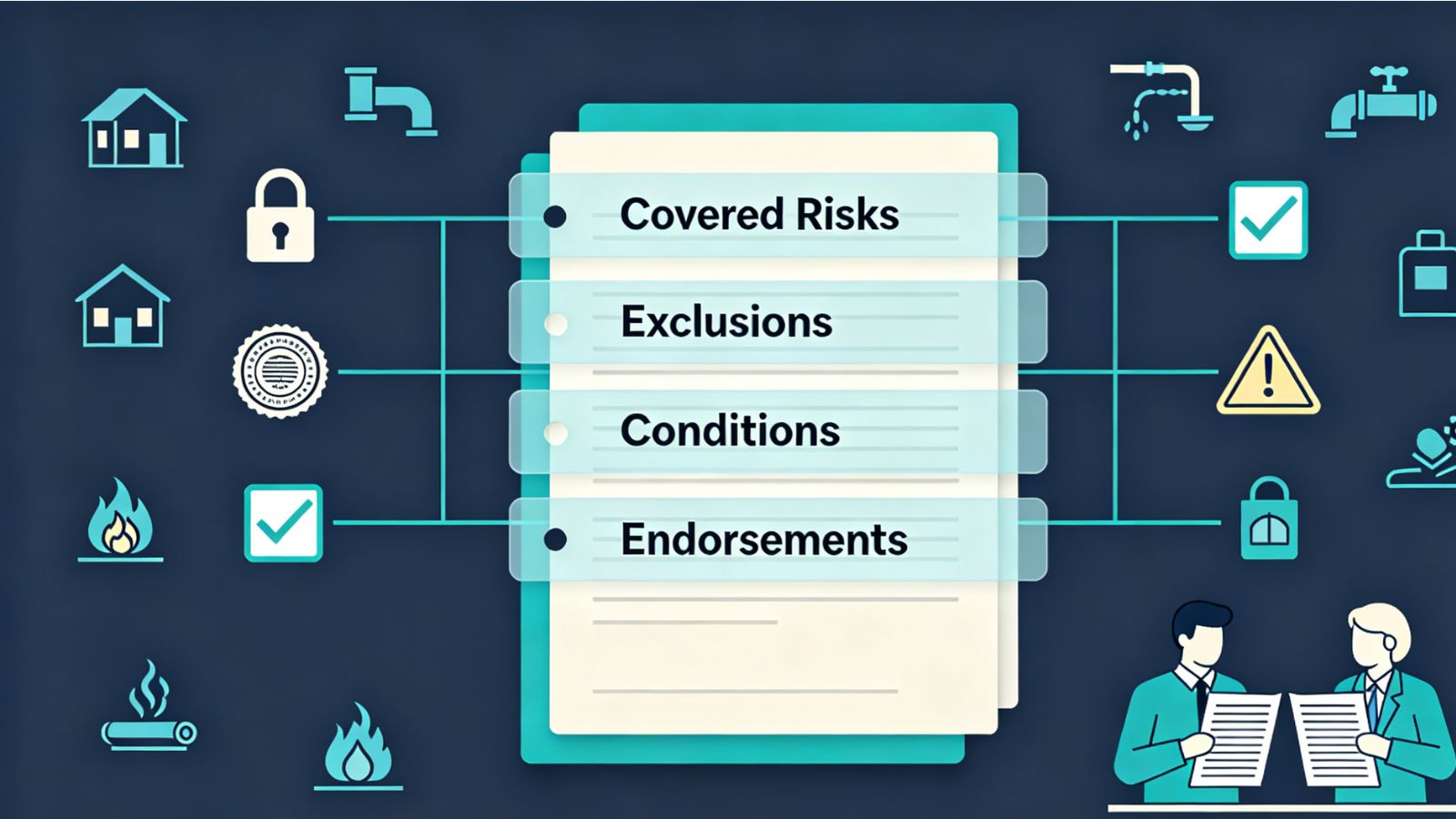
Many people focus primarily on the section that describes insurance protection, but other parts of the contract often determine how that protection works in practice. Exclusions explain situations where the policy does not respond or where special limitations apply. They are not simply exceptions added at the end of a contract; they help define the overall boundaries of the agreement.
Conditions also influence how claims are handled. Insurance policies may include requirements related to reporting losses, documenting damage, protecting property from additional harm, and cooperating during the claims process. Even when a particular event falls within covered risks, these contractual responsibilities may affect how the claim is evaluated.
Endorsements add another layer by changing the original policy terms. An endorsement may expand protection, remove certain limitations, or address a specific situation that is not fully covered under the standard contract. For example, some risks may require separate coverage arrangements or additional endorsements because they are handled differently from ordinary property losses. Reviewing endorsements alongside the main policy wording helps reveal how the final contract differs from the standard version.
One common mistake is assuming that a more expensive insurance policy automatically provides complete protection. Premium amounts can reflect many factors, including coverage limits, deductibles, property characteristics, location, and underwriting considerations. In some cases, broader protection may affect cost, but price alone does not explain every difference between insurance contracts.
Another frequent mistake is reading only the declarations page. The declarations page provides important summary information, including coverage amounts and policy details, but it does not contain every rule that affects claim decisions. Definitions, exclusions, conditions, and endorsements often contain the language that determines how the policy responds to a specific loss.
A third mistake is misunderstanding what open perils means. The term describes the structure of coverage, not a promise that all possible events will be paid. Similarly, named perils coverage is not simply “limited insurance”; it is a contract that defines protection through a specific list of covered risks. Both approaches require careful review because the details determine how the policy operates.
When reviewing a property insurance policy, several questions can help clarify how the contract defines protection:
Is the policy based on named perils or open perils coverage?
Which causes of loss are specifically included?
What exclusions could affect common claim situations?
Are endorsements changing the standard coverage?
Are there special deductibles, limits, or conditions that apply?
Are there risks that require separate coverage or additional protection?
Does the policy wording reflect the types of risks associated with the property?
These questions are not a replacement for professional insurance advice, but they can help consumers better understand the documents they already have. Insurance contracts use technical language because they must define responsibilities precisely, yet understanding the basic structure makes those documents easier to evaluate.
Insurance terms can create the impression that policies are easier to compare than they actually are. Named perils and open perils describe two different methods for organizing protection, but the final outcome depends on the entire contract. Covered risks, exclusions, conditions, endorsements, and policy limits work together to define how a claim may be handled.
The most useful skill is not memorizing every insurance term. It is learning how policy language connects covered risks, exclusions, and claim decisions. Once these relationships become clearer, insurance documents become easier to interpret because the difference between broad protection and actual contractual obligations is easier to recognize.
For homeowners and property owners, the value of understanding insurance structure comes from being able to read a policy as a contract rather than as a simple promise of protection. Different policies may use different methods to define risk, and no single structure is automatically superior in every situation. The important factor is understanding how the wording of a specific agreement determines what protection exists when a loss occurs.