
When a major hurricane, earthquake, wildfire, or other catastrophe causes widespread damage, the insurance companies that issued the affected policies do not necessarily bear the entire financial loss themselves. Primary insurers can transfer part of their exposure to other companies through a system known as reinsurance.
The basic idea is fairly simple: an insurer buys protection for some of the risks it has agreed to cover. If losses meet the conditions specified in the reinsurance contract, the reinsurer absorbs part of those losses in return for the premium paid by the primary insurer.
That arrangement allows insurers to manage unusually large or volatile exposures without relying entirely on their own capital. It also spreads insurance risk across a much broader financial network.
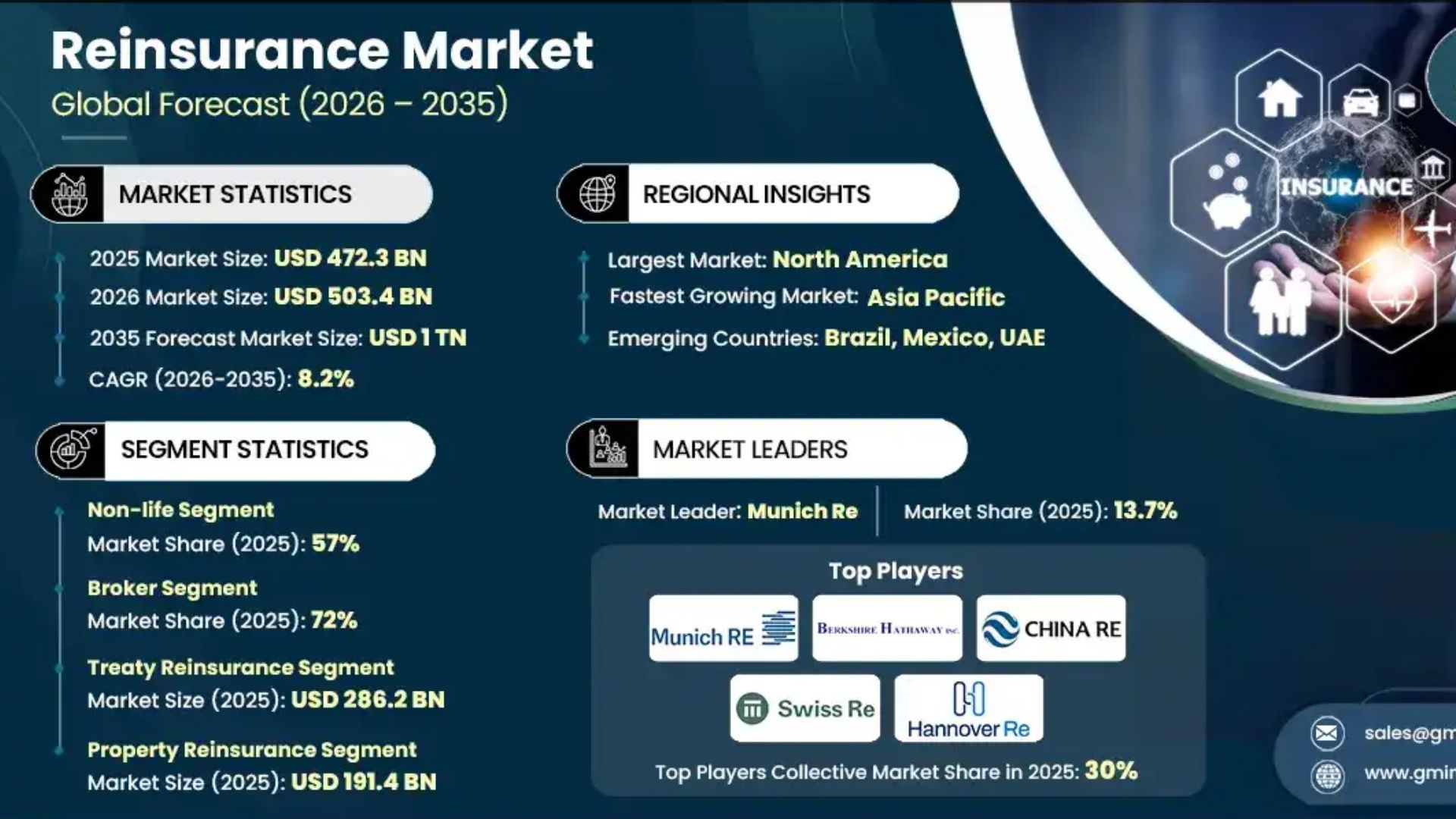
An insurer may have thousands or even millions of policies on its books. Most claims occur independently, but certain events can produce many claims at once.
A severe hurricane, for example, can affect homes, vehicles, businesses, and infrastructure across a large geographic area. Without appropriate risk-management arrangements, a concentrated catastrophe could create substantial losses for an insurer.
Reinsurance helps address that problem.
The insurer that purchases reinsurance is commonly called the ceding insurer, or cedant. It pays a premium to a reinsurer in exchange for coverage defined by a contract. Depending on the structure, the reinsurer may assume a percentage of the underlying business, cover losses above a specified retention, or provide another form of protection.
The NAIC identifies several reasons insurers use reinsurance, including expanding underwriting capacity, sharing large risks, spreading catastrophe exposure, stabilizing underwriting results, and reducing the insurer's net liability relative to its financial resources.
Reinsurance therefore serves as one part of an insurer's broader capital and risk-management strategy.
Reinsurance is commonly divided into treaty reinsurance and facultative reinsurance. The difference is mainly about the scope of the agreement.
A treaty generally covers a defined class or portfolio of business rather than requiring the reinsurer to negotiate each individual policy separately.
For example, an insurer might enter into a treaty covering a specified group of homeowners policies that meet the contract's eligibility requirements. The exact risks covered, limits, exclusions, and financial terms are established in the treaty.
Treaty arrangements can be either proportional or non-proportional.
Under a proportional arrangement, the reinsurer shares an agreed portion of the premiums and losses associated with the covered business.
A simplified quota-share example might involve a reinsurer taking 40% of the covered business. Subject to the actual contract terms, the reinsurer would receive a corresponding share of premium and assume a corresponding share of covered losses.
The advantage is that the primary insurer can transfer part of its exposure across a portfolio rather than retaining the entire risk itself.
The NAIC identifies quota share as one form of proportional treaty reinsurance.
Excess-of-loss reinsurance works differently.
Instead of sharing every loss proportionally, the reinsurer generally becomes responsible when covered losses exceed a specified retention, subject to the limits and other terms of the agreement.
Consider a simplified example. An insurer might retain the first $5 million of a covered event, while a reinsurance layer responds to covered losses above that amount up to a specified limit.
This structure can be particularly useful for protecting an insurer against large individual losses or catastrophe events.
The actual contract can be more complicated, with attachment points, limits, exclusions, aggregate provisions, and other conditions. The simple example is intended only to illustrate the basic mechanism.
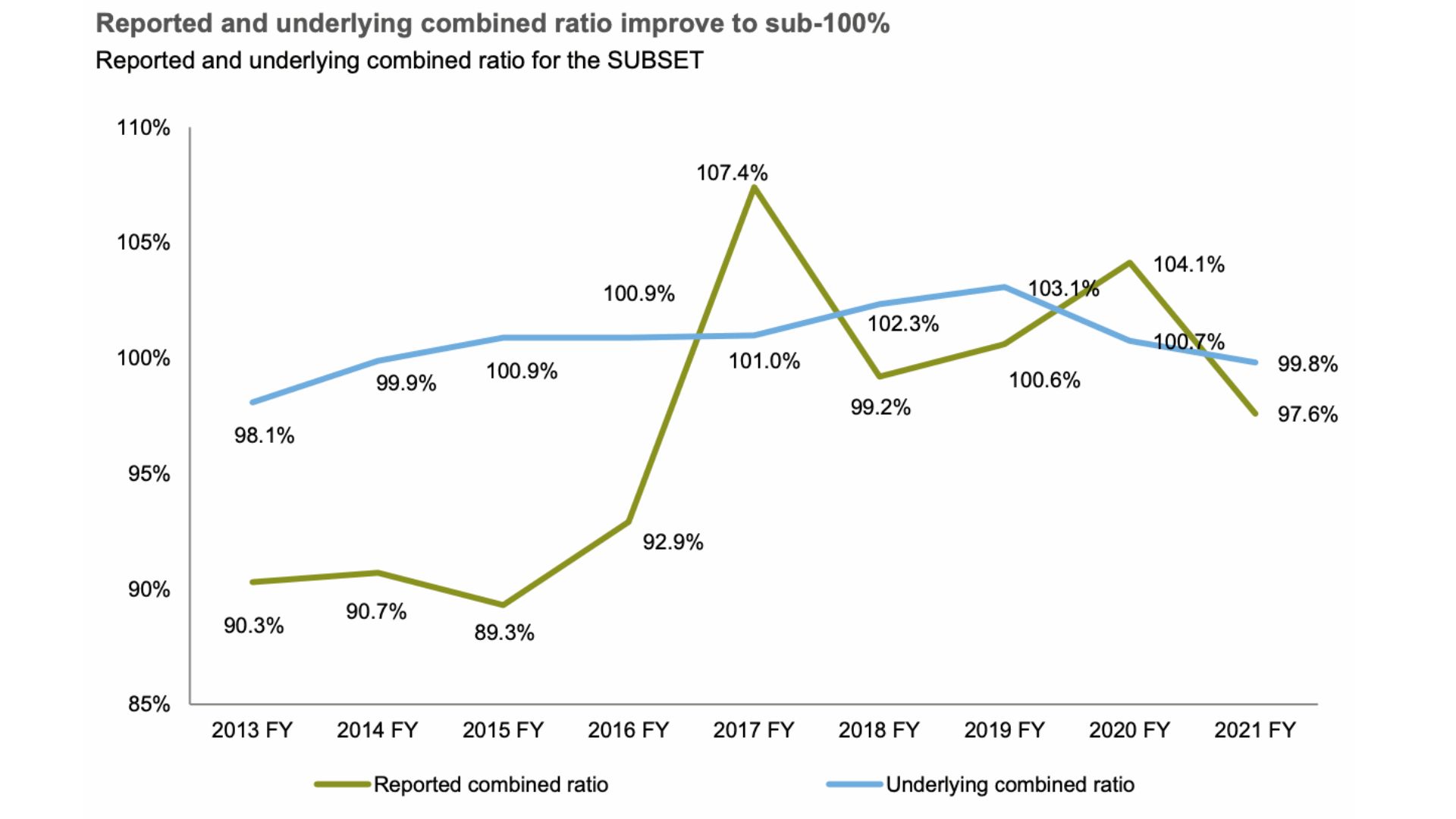
Facultative reinsurance is more specific.
Instead of automatically covering a defined portfolio, the reinsurer evaluates an individual risk and decides whether to accept it.
This can be useful when the underlying exposure is unusually large, specialized, or outside the normal profile of the primary insurer's treaty arrangements.
A large commercial building provides an easy example. Rather than relying entirely on its existing portfolio reinsurance, an insurer might seek facultative protection for a particularly large property exposure.
The reinsurer can then examine the specific characteristics of that risk and negotiate the terms of the reinsurance coverage.
The distinction is straightforward: treaty reinsurance generally addresses a defined class of business, while facultative reinsurance focuses on individual risks.
One of the most important features of reinsurance is its ability to spread risk.
A primary insurer may be concentrated in one state, region, or line of business. A global reinsurer can have a much broader portfolio that includes risks from multiple countries and different types of insurance.
That diversification can make a particular catastrophe less damaging to the reinsurer's overall portfolio than it would be to a local insurer concentrated in the affected region.
This does not make catastrophe losses disappear. The losses still have to be paid somewhere. Reinsurance changes who ultimately bears the financial exposure and distributes that exposure among multiple participants.
The same principle can extend beyond traditional reinsurers. Insurance risk can also reach capital markets through structures such as insurance-linked securities (ILS) and catastrophe bonds.
Catastrophe bonds, often called cat bonds, are securities designed to transfer specified insurance or catastrophe risks to investors.
An insurer or reinsurer can use a special-purpose structure to issue securities whose returns depend on whether defined catastrophe-related trigger conditions occur.
Investors generally receive interest for taking on that risk. If the specified trigger is reached, however, some or all of the invested principal may be used to help cover the insured loss, depending on the bond's structure.
The important detail is the trigger. It is not necessarily as simple as a hurricane occurring. Catastrophe bonds can use different trigger mechanisms, and the exact conditions are established in the transaction documents.
For insurers and reinsurers, these instruments provide another potential source of risk-bearing capacity outside the traditional reinsurance market.
For investors, they represent a specialized asset class with risks that can behave differently from conventional financial markets.
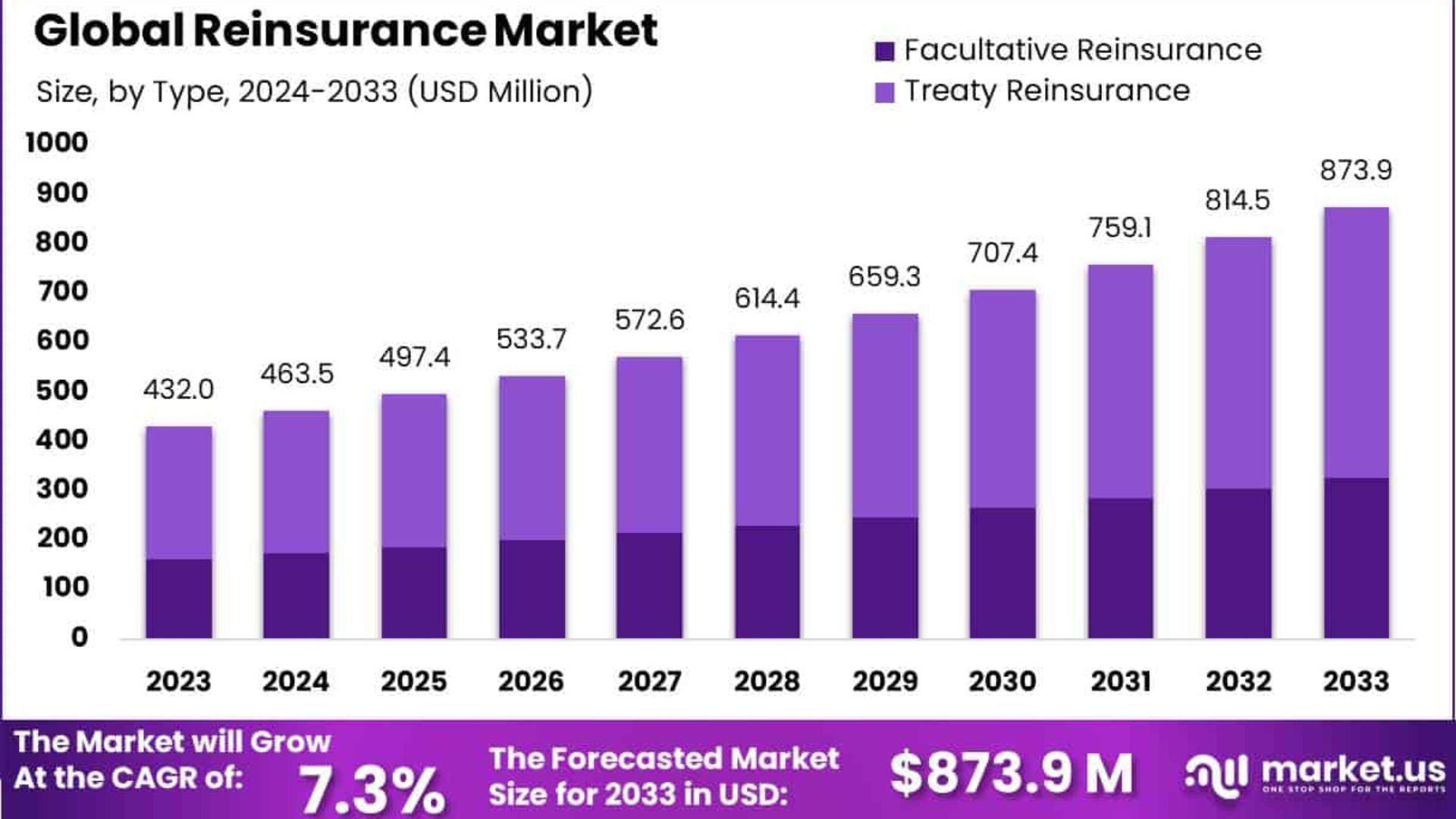
Reinsurance pricing is not fixed. It moves with market conditions.
After a period of severe catastrophe losses, reinsurers may face higher claims, changes in available capital, and increased demand for protection. At the same time, catastrophe expectations, modeling assumptions, investment conditions, and the availability of alternative capital can influence pricing.
When capacity becomes harder to obtain, the market can move into what is commonly called a hard market. Reinsurers may seek higher premiums, tighter terms, higher attachment points, or lower limits, depending on the type of coverage and prevailing conditions.
When capital and capacity become more abundant, competition can move the market in the opposite direction.
The cycle is therefore more complicated than simply "losses go up, so prices go up." Supply, demand, capital, catastrophe experience, risk expectations, and contract terms all matter.
Consumers generally do not buy reinsurance directly. They buy policies from primary insurers, which may then transfer part of their exposure to reinsurers.
That creates an indirect connection between the two markets.
If the cost or availability of reinsurance changes substantially, an insurer may reconsider its pricing, underwriting guidelines, catastrophe exposure, or portfolio strategy. But the effect is not necessarily passed directly to every policyholder.
For example, an insurer facing higher catastrophe-reinsurance costs might respond through a combination of premium adjustments, changes in deductibles or coverage terms, underwriting changes, increased retention of risk, or other capital-management decisions.
The final impact on customers depends on the insurer, the type of policy, the location of the risk, and the regulatory environment.
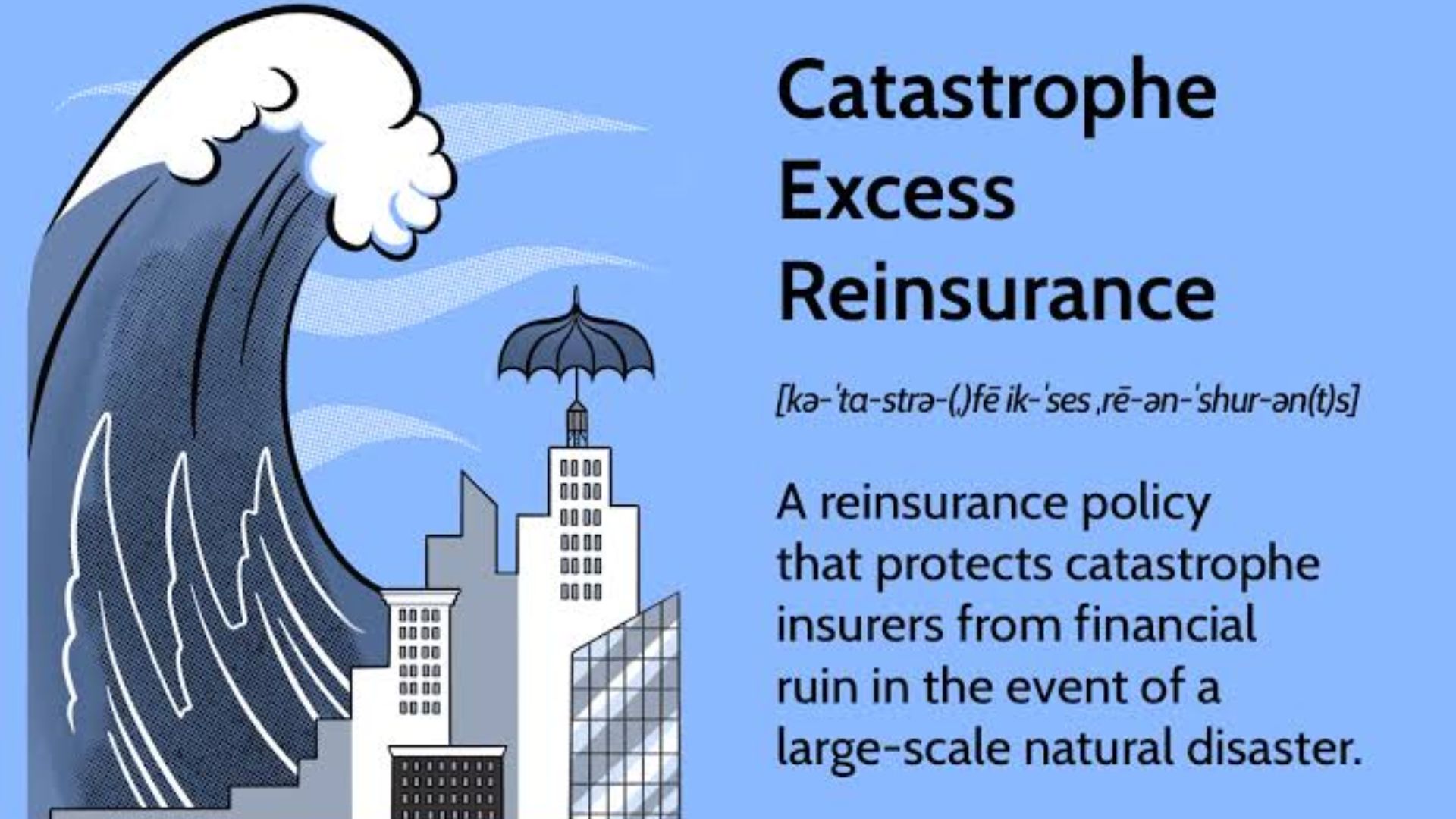
It is tempting to think of reinsurance as nothing more than protection against hurricanes and earthquakes. Catastrophe risk is certainly an important part of the market, but reinsurance has broader uses.
It can help insurers manage large individual exposures, support underwriting capacity, smooth the financial impact of losses, and manage the amount of risk retained on their balance sheets.
Different contracts are designed for different purposes. A proportional treaty, an excess-of-loss layer, and a facultative placement can all transfer risk, but they do so in very different ways.
That flexibility is one reason reinsurance has become an important part of insurance risk management.
Reinsurance is essentially a risk-transfer system operating behind the primary insurance market.
A homeowner may only see the policy issued by a local or national insurer, but part of that insurer's exposure may have been transferred through one or more reinsurance arrangements. Those arrangements can distribute large or volatile risks among multiple insurance companies and, through insurance-linked securities, among capital-market investors as well.
Treaty and facultative agreements provide different ways to structure that transfer. Proportional arrangements share premiums and losses, while excess-of-loss structures respond when covered losses pass specified thresholds.
The result is not a guarantee that an insurer will avoid losses. Instead, reinsurance gives insurers another tool for managing the size and concentration of the risks they retain.
When a major catastrophe occurs, that distinction matters. The financial burden does not necessarily rest with the company that originally sold the policy; it can be distributed through a much wider network of insurers, reinsurers, and capital-market participants.